Published by Film Desk Books, 2025
Perfect-bound softcover
First edition of 1,500
276 pages
8×5.5 inches
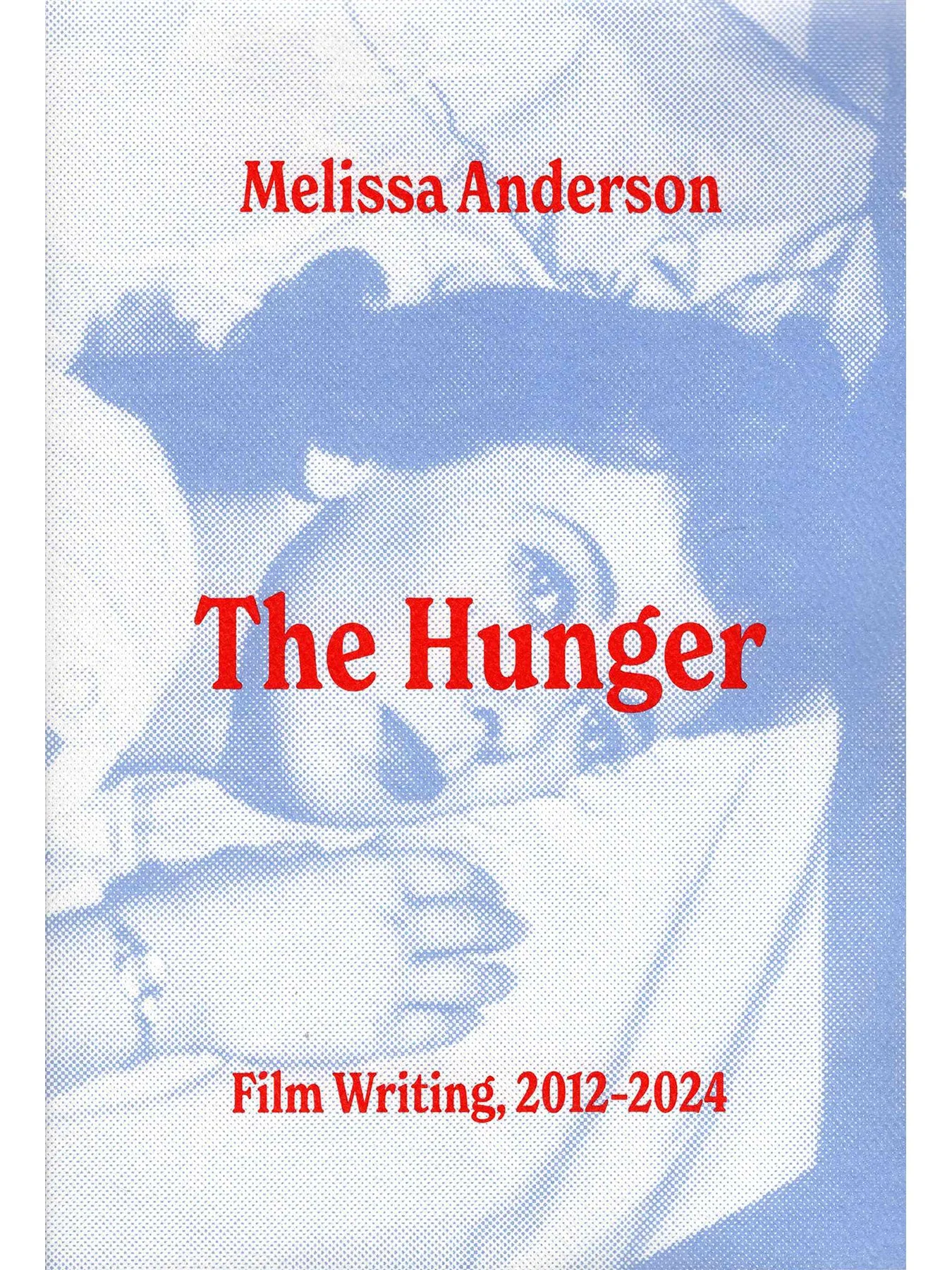
The Hunger assembles the best of Anderson’s film writing from, among other outlets, Bookforum, Artforum, the Village Voice, and 4Columns, where she has been the film editor and lead film critic since 2017.
Including not only reviews of contemporary and older movies but also essays devoted to the work of a single performer (such as Candy Darling and Shelley Duvall), The Hunger showcases an exceptional voice in criticism—one that is queer but undoctrinaire, homophilic yet heterodox. The collection concludes with a wide-ranging discussion between Anderson and the critic and scholar Erika Balsom about the role of pleasure and sexuality in writing, assessing stardom in the 21st century, covering repertory cinema in New York City, and the exhilarations that the movies still provide.
Click here to read a review of The Hunger in Bookforum
Click here to read a review of The Hunger in Literary Hub
Click here to read an interview with Melissa Anderson about The Hunger in Interview
Click here to read an interview with Melissa Anderson about The Hunger in Mubi Notebook
Click here to read an interview with Melissa Anderson about The Hunger in Screen Slate

Published by Film Desk Books, 2025
Sewn-bound hardcover
First printing of 2,000 copies
191 pages
8x6 inches
Filmmaker Terence Davies’s only published novel. Includes a selection of Davies’s original poetry, much of it never before published, along with an introduction by Michael Koresky and an afterword by James Dowling.
“Hallelujah Now fearlessly uses the novel form to give voice to anxieties that might have been otherwise unportrayable. Many artists who work in other mediums carry literary aspirations; few pull it off with such provocation and undaunted individuality. Davies’s cinema had no comparison, it was a subgenre unto itself, and similarly Davies’s novel feels like nothing less than a pure emanation of the self, beholden to nothing and no one else.” —Michael Koresky, from his introduction.
From Robert’s birth into a Catholic family in Liverpool, to his surreptitious sexual escapades and sadomasochistic fantasies, and his final, evocative journey to a nursing home, his life unfolds in a sensational and explicit stream of consciousness. Skillfully depicted in three sections, Hallelujah Now is a synthesis of memory, of vividly recaptured moments of childhood, of isolation, lust, and adventure. Time past and time present combine to paint a startling picture of a man fighting to accept his sexuality—and his mortality.

Published by Film Desk Books, 2025
Sewn-bound hardcover
First printing of 2,000 copies
182 pages
8x6 inches
“I’m a director who writes, not a writer.”—Michelangelo Antonioni
Thirty-three richly suggestive stories by Antonioni, that range in length from a single paragraph to several pages. Not stories in the usual sense, these are instead a series of evocative sketches or “narrative nuclei,” each the genesis for a possible future film. Although he ultimately didn’t develop most of these ideas further, encountering them now provides a unique glimpse into Antonioni’s mind and cinematic point of view.
Published by Film Desk Books, 2024
Sewn-bound hardcover with dust jacket
First printing of 2,000 copies
88 pages
8.5x6 inches
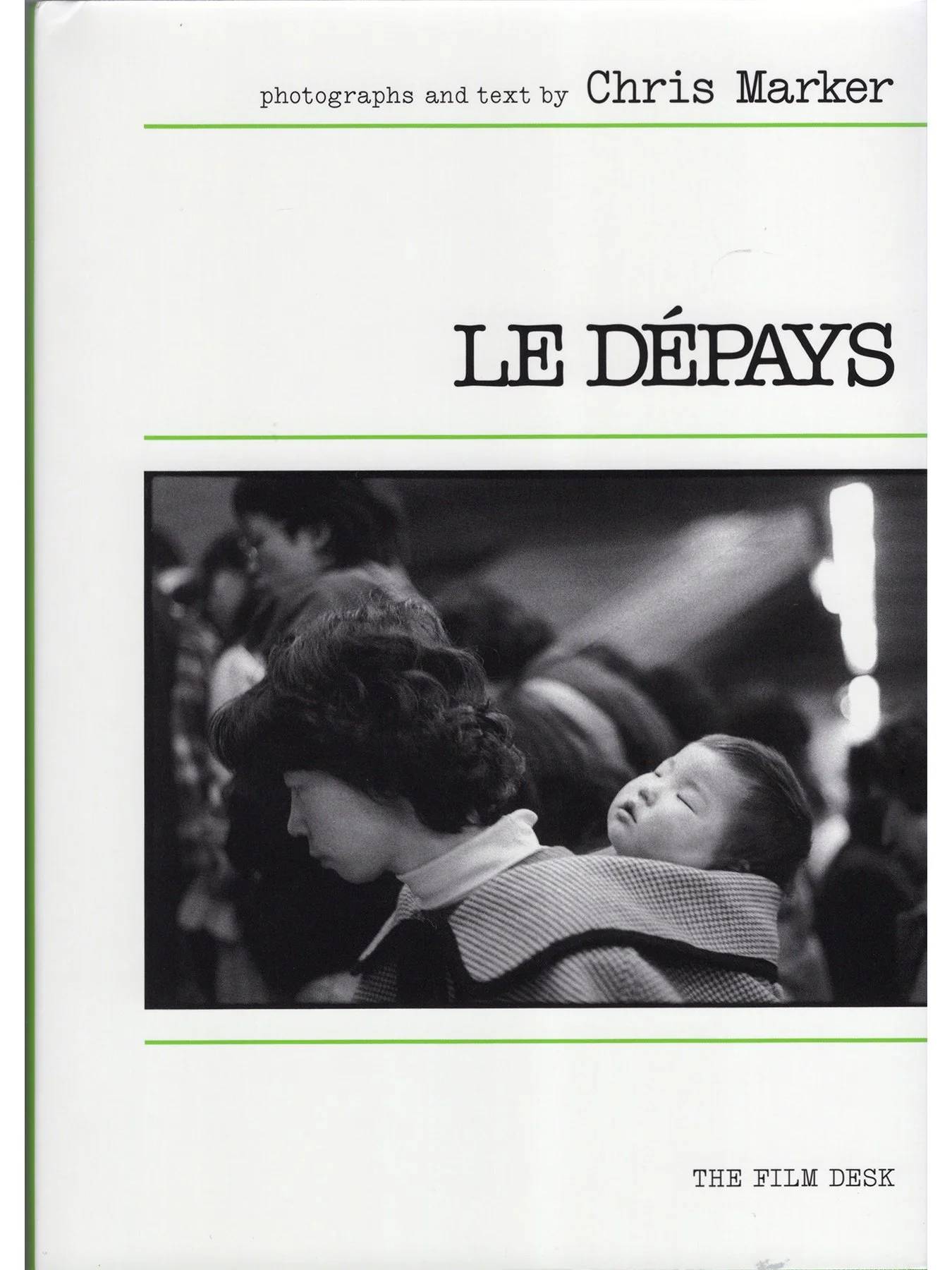
This is the first English language edition of Chris Marker’s 1982 photo-essay, Le Dépays. Lovingly adapted from the original design, it features Marker’s own translation astride some of his most exquisite, yet rarely seen, black-and-white photography. Realized over the same years as its film companion, Sans Soleil, the book traces similar themes—cats and owls and Japan—but without ever leaving Golden-Gai for Guinea-Bissau. Musing among department store maneki-neko and dreamers on the metro, wandering between Tokyo and no-place at all, this is nevertheless a unique glimpse of Marker feeling very much himself and quite at home; that is, delightfully disoriented.
“Inventing Japan is just another way of getting to know it . . . Trust appearances, consciously confuse the decor with the drama, never worry about understanding, just be there—dasein—and everything will come your way. Well, something, at least . . .”—Chris Marker, from Le Dépays
Chris Marker, 1921–2012. Filmed, photographed, traveled, loved cats.
With a new introduction by writer and artist Sadie Rebecca Starnes.

Published by Film Desk Books, 2023
Sewn-bound hardcover
First printing of 1,500 copies
293 pages
8x6 inches
Introduction by Richard Brody.
Lillian Ross was a staff writer at The New Yorker for seven decades, and wrote on filmmakers regularly over the course of her extraordinary career. Beginning with “Come In, Lassie!”, a 1948 report on Hollywood’s reaction to HUAC through a 2001 visit to the set of Wes Anderson’s The Royal Tenenbaums, Ross covered the people who make the movies with singular insight and humor. Ross’ lengthiest pieces, about Otto Preminger fighting against the television broadcast of Anatomy of a Murder in 1966, and Francis Ford Coppola preparing for the release of One from the Heart in 1982, are legendary portraits of the larger than life personalities that Ross rendered human on the page.
Also features pieces on: Akira Kurosawa, François Truffaut, Jean-Luc Godard, Oliver Stone, John Huston, Jacques Tati, Charles Chaplin, Mag Bodard, Alfred Hitchcock, Clint Eastwood, Federico Fellini, Anjelica Huston, Gene Kelly, Donald Shebib, and John Cassavetes, Ben Gazzara & Peter Falk
"The recognition, from early in her career, that the center of gravity in the world of movies is indeed the director puts Ross . . . at the forefront of film-centric writers of her generation. The pieces in Film Business reflect her attunement to the art of movies—an attunement that’s also something of a philosophy of life, as befits the work of a writer who, self-consciously approached nonfiction writing as an essentially literary, novelistic venture—and who made that discovery while working on her first major piece about movies.”—Richard Brody, from his Introduction.
“While reporting a story, I find myself automatically translating what I see and hear into film-like scenes.”—Lillian Ross

Published by Film Desk Books, 2022
Sewn-bound hardcover
First printing of 2,000 copies
162 pages
8x6 inches
“I’m woken by unbearable pain and since I can’t sleep or pace back and forth, I relieve myself by taking this notebook and attempting to cry out my pain to the unknown friends who will read these lines. They exist. I know them without knowing them. I can just see them in the shadows.” —Jean Cocteau
Beginning on August 26, 1945, the day before shooting began, until June 1, 1946, the day after the film was first screened, Jean Cocteau kept a diary of the making of his masterpiece Beauty and the Beast. Throughout he details every stage of production, as he faces and surmounts numerous obstacles including severe problems with his health, and ultimately the great pleasures of camaraderie with his remarkable collaborators: Jean Marais, Henri Alekan, and Christian Bérard, amongst others.
New English translation by Nicholas Elliott.
“I wonder if these hard days might be the sweetest of my life. Full of friendship, affectionate arguments, laughter, and control over fleeting time.” —Jean Cocteau

Published by Film Desk Books, 2022
Perfect-bound softcover
First printing of 1,000 copies
129 pages
6.5x4.75 inches
“In Facing Blackness, Ashley Clark traces the contours of Bamboozled, guiding readers through Lee’s intricate representation of race, politics, and popular culture. Clark moves beyond straightforward film criticism to situate the film within a complex history of blackness and American entertainment, making a powerful argument for its ongoing relevance and vitality. Thoughtful, rigorous, and witty, Facing Blackness is a thoroughly engaging analysis of this monumental film that is imperative reading for fans of Spike Lee and cinephiles more broadly.” —Racquel Gates, author of Double Negative: The Black Image and Popular Culture
“The value of Facing Blackness isn’t that Clark renders the film less challenging, but that he has thought through its implications in ways few, if any, have yet attempted. In so doing, he has shown that to understand Lee’s art, one has to deal with Bamboozled. It is, as Clark puts it, ‘the central work in Lee’s canon—the house on fire to which all roads lead.’ Facing Blackness doesn’t extinguish the fire, but rather maps the roads.” —Keith Watson, Slant Magazine
“Clark’s in-depth analysis of Bamboozled brilliantly validates and elucidates the importance of a forgotten cinematic treasure. This is essential reading for anyone interested in black film, black history, or America’s dark past.” —Kaleem Aftab, author of Spike Lee: That’s My Story and I’m Sticking to It
Ashley Clark is a writer, critic and film programmer. He was born in London, lives in Jersey City, and works in Manhattan. Facing Blackness, initially published in 2015, is his first book. This revised second edition contains a new foreword.

Published by Film Desk Books, 2021
Sewn-bound hardcover with dust jacket
First printing of 3,000 copies
336 pages
9x6.5 inches
FINAL COPIES!
Amos Vogel’s seminal book Film as a Subversive Art was first published in 1974 and, in Vogel’s own words, detailed, “the accelerating worldwide trend toward a more liberated cinema, in which subjects and forms hitherto considered unthinkable or forbidden are boldly explored.” It is now available again in this newly restored edition, in which hundreds of errors have been corrected. Accompanied by over three hundred rare film stills, newly sourced and re-scanned for this edition.
This revised edition of the book edited by Jim Colvill and Herb Shellenberger. New foreword by Herb Shellenberger.
Amos Vogel (1921–2012) was born in Vienna and emigrated to the United States in 1938, eventually ending up in New York City. From 1947 to 1963 Vogel and his wife Marcia ran Cinema 16, the most successful and influential membership film society in North American history. In 1963 Vogel founded the Lincoln Center Film Department and was co-founder of the New York Film Festival, which he ran until 1968. He was a longtime faculty member at the University of Pennsylvania’s Annenberg School and a regular contributor to The Village Voice and Film Comment.
"Film as a Subversive Art takes an outstanding place…in the already extensive literature on film. It’s pictorial enlightenment and its text make it an invaluable work.”—Luis Buñuel
“Is there a film book more influential? … a gorgeous revised edition.”—CinemaScope
“Vogel’s masterpiece is one of the truly iconic books on cinema.”—Greg de Cuir Jr., independent curator and writer
“A manifesto that wages war on cinema’s orthodoxies.”—Nick Pinkerton, The Village Voice
“Amos Vogel is the moral conscience of the world of cinema.”—Werner Herzog
“One of the great pioneers of the avant-garde film.”—Yoko Ono
“The man was a giant.”—Martin Scorsese
Read about this new edition of Film as a Subversive Art on ScreenSlate
Read about Amos Vogel and Film as a Subversive Art in The New York Times here
Read Steve and Loring Vogel on their father in Film Comment here
Read The Film Desk’s Jake Perlin in Amos Vogel in Film Comment here
Listen to the Film Comment podcast on Amos Vogel here
Read about Amos Vogel and Film as a Subversive Art on Mubi here

Published by Film Desk Books, 2021
Sewn-bound hardcover
First printing of 1,500 copies
267 pages
8x6 inches
Named 3rd best book of 2021 in Sight & Sound
A comprehensive look at the work of Chinese filmmaker Jia Zhangke by celebrated critic Jean-Michel Frodon. Includes an extensive in-depth interview with Jia, essays on each of his films, conversations with his main collaborators, including Zhao Tao, and a selection of his own writings.
Translated from the French by Sally Shafto. Foreword by Dudley Andrew. Afterword by Walter Salles.
“The World of Jia Zhangke is a rarity, for it comes from a sustained encounter of one of our greatest critics with one of our greatest directors. Thankfully both are still working at full tilt.”—Dudley Andrew

Published by Film Desk Books, 2020
Sewn-bound hardcover
First printing of 2,000 copies
148 pages
8x6 inches
OUT OF PRINT
Named 10th best book of 2021 in Sight & Sound
Introduction, afterword and footnotes by Cyril Béghin.
Translation by Nicholas Elliott.
Three dialogues between Marguerite Duras and Jean-Luc Godard from 1979, 1980 and 1987.
“The two demonstrate a profound shared passion, a way of literally being one with a medium and speaking about it with a dazzling lyricism interspersed with dryly ironic remarks, fueled by a conviction that inspires them to traverse history. Their point of intersection is obvious. Duras, a writer, is also a filmmaker, and Godard, a filmmaker, has maintained a distinctive relationship with literature, writing and speech.”—Cyril Béghin
“This deceptively slim volume condenses a decade worth of vigorous activity into a few brief, yet enormously rich encounters.”—Sight & Sound

Published by Film Desk Books, 2019
Perfect-bound softcover
Third printing of 500 copies
76 pages
6.5x4.75 inches
OUT OF PRINT
"I want to be eighteen to live a life in New York. A magical, overwhelming, beautiful city. One of those fortunate cities that possess grace." — Pier Paolo Pasolini
An in-depth interview with film director, poet, critic, and political activist Pier Paolo Pasolini, conducted in New York in 1969. In that year, Pasolini visited the city for the second time (his previous visit had been in 1966 for the New York Film Festival) and was interviewed by Guiseppe Cardillo, the longtime director of Instituto Italiano di Cultura of New York, for a wide ranging conversation in which he discusses his childhood, his move to Rome, religion, Jean-Luc Godard, Marxism and the sequence shot. The recording of this interview was completely unavailable to the public until it was recently discovered and rescued by Luigi Fontanella, a poet, novelist, Pasolini scholar and professor at SUNY Stony Brook.
This book presents this historic interview in full, in a new translation from the Italian by Michael Palma, and with an extensive introduction by Luigi Fontanella.

Published by Film Desk Books, 2018
Perfect-bound softcover
Edition of 500
64 pages
6.5x4.75 inches
OUT OF PRINT
Collects together never before translated writings on Philippe Garrel’s legendary film L’Enfant secret (The Secret Child) for the first time. Includes:
- “The Wademant Notebook.” Pre-screenplay for L’Enfant secret by Philippe Garrel. Translated into English for the first time by Nicholas Elliott.
- “On L’Enfant secret.” An interview with Philippe Garrel by Alain Philippon from Cahiers du Cinéma in 1983. Translated into English for the first time by Nicholas Elliott.
- “Garden of Stone: Philippe Garrel’s L’Enfant secret.” An essay by Adrian Martin, newly updated by the author.
- “L’Enfant secret - Philippe Garrel.” - An essay by Serge Daney, new English translation by Nicholas Elliott.

First published 2014 by Film Desk Books
Perfect-bound softcover
First printing of 1,000 copies
88 pages
6.5x4.75 inches
OUT OF PRINT
In 1949 Lillian Ross wrote her first “Talk of the Town” piece on director John Huston for The New Yorker. Over the next four decades she would write about him five more times for the magazine: from the set of The Bible in Rome in 1965, the 1969 shoot of The Kremlin Letter in Manhattan, the New York premiere of Fat City in 1972, production meetings for Escape to Victory in 1980, and the Brooklyn locations of Prizzi’s Honor in 1984. This book collects these six extraordinary pieces together for the first time, along with an additional essay that sees Anjelica Huston reminiscing abut her father from the set of her directorial debut Bastard Out of Carolina in 1996.
Lillian Ross was a staff writer at The New Yorker who wrote frequently about moviemakers, but none more than John Huston. He was the main character in her classic 1952 book, Picture, about the making of The Red Badge of Courage. The book, still in print, is generally acknowledged to be the first time a long factual story was written in fictional form. Ross lived in Manhattan and passed away in 2017 at age 99.

Published by Film Desk Books, 2014
Perfect-bound softcover
Third printing of 500 copies
40 pages; 6.5x4.75 inches
OUT OF PRINT
Between 1960 and 1976, The New Yorker staff writer Lillian Ross wrote a series of articles for the magazine’s “Talk of the Town” section covering François Truffaut’s visits to New York: for The 400 Blows in 1960, The Soft Skin in 1964, The Wild Child in 1970, Day for Night in 1973, and Small Change in 1976. This book collects these articles together for the first time.
Lillian Ross was a staff writer at The New Yorker. She wrote often about moviemakers—including Clint Eastwood, Federico Fellini, Akira Kurosawa, Oliver Stone, Tommy Lee Jones, Wes Anderson, and Francis Ford Coppola. She lived in Manhattan and passed away in 2017 at the age of 99.
"As modest in appearance as it is auspicious in substance."—Richard Brody, The New Yorker
Film Desk Publications:

Published by RideWithBob/Film Desk Books, 2024
Hardcover
First edition of 2,500
572 pages
9.5x6.75 inches.
Richard C. Sarafian’s Vanishing Point (20th Century Fox, 1971) is the ultimate analog car chase movie with that hard-to-pin-down something extra. Written by renowned Cuban novelist Guillermo Cabrera Infante under a pseudonym (Guillermo Cain), it’s nominally the saga of a speedaddled Vietnam vet existentially on the lam in a Dodge Challenger. It’s also a modern Western, a dystopian allegory of our surveillance society, and a love letter to the muscle car, all rolled into one.
No surprise it’s become a cult classic, adored and paid homage to by Quentin Tarantino, Steven Spielberg, Bruce Springsteen, Richard Prince, Alberto Moravia, Guns ‘n’ Roses, Primal Scream, Audioslave, and countless others. In the fifty-plus years since the film’s release, the lore and legends around it have grown like Topsy. Now, Robert M. Rubin’s Vanishing Point Forever brings together everything there is to know in one lavishly illustrated volume.
A monumental treat for anyone who loves film culture, Vanishing Point Forever explores the movie’s profound impact across popular media, the arts, and the car world in obsessive detail. Nearly 600 pages include a complete reproduction of the film’s final shooting script, pages from Cabrera Infante’s early drafts, his own location scouting photos (never seen before), and a gold mine of production and publicity stills, ephemera, excerpts, reflections and essays. Rubin details how the movie came to life — from stars Barry Newman, Cleavon Little, and Charlotte Rampling (so enigmatic she was cut from the main release); to the groundbreaking stunts coordinated by Hollywood legend Carey Loftin; to its unique, remarkable half-life. In the words of Sarafian, the film just “wouldn’t die.”
Rubin’s tribute also includes assembled insights, interviews and quotes from a broad range of essential voices, including Cabrera Infante, Prince, Moravia, J. Hoberman, cinematographer and director Janusz Kaminski, Raymond Chandler, Jean Baudrillard, Jack Kerouac, Cormac McCarthy, Thomas Pynchon, Lucy Sante, race driver Sam Posey, and many more. Designed by COMA Amsterdam | New York, this is the latest graphic treat in a long collaboration with Rubin, including their most recent, the award-winning Richard Prince: Cowboy (Prestel, 2020).
Read about the book in Gagosian Quarterly
Read about the book in Bomb Magazine

Published by Woodville Press, 2022
Perfect-bound softcover
Second printing of 500, 2026
303 pages
7.5x5 inches
“Essential”—IndieWire
“What’s most remarkable about this volume is its transparency. Throughout, in new, rewritten and republished pieces, you can see Godfrey’s questing and questioning mind latching onto a subject for which he has a deep affinity, learning as much as he can about it—by pondering the works themselves, talking to their creators, and absorbing the culture that birthed the scene—and then figuring out a way to transmit his enthusiasm to the widest American audience possible.”—Matt Zoller Seitz
“I admire Godfrey for his strong support of Iranian cinema and his efforts to introduce Iranian films to American audiences. Although movies are shown by distributors and exhibitors, it’s really the critics who bring the audience. Godfrey’s reviews also help us in Iran by providing critical support against those who attempt to suppress us and keep us from working.”—Jafar Panahi, filmmaker
“So impressed by his first encounters with contemporary Iranian films, Godfrey Cheshire decided to do a deep dive into Iranian literature, art and society, not to mention film history. The happy result is this book, displaying an incredible range of knowledge about what is the most remarkable film movement of the past decades, while offering a deep exploration of both this cinema’s deep roots as well as its celebrated achievements.”—Richard Pena, Professor of Film and Media Studies, Columbia University
“Godfrey Cheshire has been the preeminent American critic on Iranian cinema for decades. With rare access to master filmmakers, Cheshire weaves together rich, personal stories, with history, culture and his brilliant insights. His passion is infectious. This is his definitive book.”—Ramin Bahrani, Oscar-nominated filmmaker
“There is no better way to discover Iranian cinema than to immerse yourself in Godfrey Cheshire’s beautifully written 30 year personal cinematic journey. This is an important, informative and compelling book at this global political moment. It is vital to know these filmmakers of purpose through the perception of an outsider with whom we can identify and to lose ourselves to the wonder, humanity, and artistry of a culture and cinema that demands our attention now more than ever.”—Michael Barker, Sony Pictures Classics
Read an excerpt from In the Time of Kiarostami on RogerEbert.com
Read a review of In the Time of Kiarostami in the Los Angeles Review of Books

Published by Woodville Press, 2019
Perfect-bound softcover
Fifth printing of 500, 2024
188 pages
7.5x5 inches
Conversations with Kiarostami collects for the first time a far ranging series of interviews with the celebrated director Abbas Kiarostami by film critic, and Iranian cinema expert, Godfrey Cheshire.
Conducted in the 1990s, these in-depth conversations offer a film-by-film account of Kiarostami’s views of his artistic development from his first short “Bread and Alley” in 1970 to the 1999 feature The Wind Will Carry Us, covering his lesser known, and seldom written about, shorts from earlier in his career, along with the masterworks that made him world famous, such as the Koker Trilogy (Where Is the Friend’s House?, And Life Goes On, Through the Olive Trees), Close-Up and Taste of Cherry. The book includes a Foreword by Ahmad Kiarostami, the director’s son, as well as an introduction from Cheshire that contextualizes the interviews and discusses his relationship with the director.
“During Godfrey’s several visits to Iran throughout a decade, he formed a relationship with my father that I had rarely seen him having with other writers. I believe this is because of Godfrey’s ability to go beyond the surface; his unique views and interpretations…It is well-known that Godfrey was one of the first people who introduced the Iranian cinema to America and, yet, there is no trace of the usual “exotic” approach…That is what you will find in this book: a refreshing conversation with Abbas that has substance, and is far from cliché.”—Ahmad Kiarostami, from his foreword.
“In many respects the best book yet published on the director.”—Cineaste
“For Kiarostami’s own overview of his early career, I’d recommend Conversations with Kiarostami.”—Richard Brody, The New Yorker
Read an excerpt from the book on RogerEbert.com here
Read an interview with Godfrey Cheshire about the book on RogerEbert.com here

Published by Hard Wait Press, 2023
Sewn-bound softcover with French flaps
First edition of 1,000
296 pages
7.5x5.5 inches
Includes 168 color images
Named one of the best books of 2023 by The Paris Review
Named one of the best books of 2023 by Sight & Sound
Time Tells is a grand study of time, technology, performance, the attention economy, and comedy. Using the cinematic time-jump, "a numerical shorthand for a fated intermission," to weave a narrative of chronopolitics, memoir, and cultural study, Masha Tupitsyn constructs a unique literary and visual phenomenology on the loss of time, presence, and attention in the digital age. Structured into two interlocked inquiries—Time and Acting—Time Tells focuses on the internet to talk about the ethics of presence and attention, comedy to talk about timing and the language of critique, and lying masculinity, the double, and acting to talk about performance and the reign of falsehood. Both volumes intersect to examine our inability to experience coherence and integration in the post-truth era.
In the first volume, Time, Tupitsyn covers wide-ranging cultural touchstones such as the ’90s TV show Felicity, Hitchcock’s Vertigo, Luca Guadagnino’s Call Me by Your Name, Joan Didion’s The Year of Magical Thinking, Pretty Woman, Wong Kar-wai’s 2046, David Fincher’s Zodiac, Jean-Luc Godard, the Beastie Boys, Wim Wenders, the art of style, memory and music in the post-internet age, and the lost ontology of cinema. Using what Tupitsyn terms “screen-shot criticism,” Time Tells makes innovative critical thinking accessible to anyone interested in American culture today.
Afterword by Felix Bernstein.
“Time Tells is a mesmerizing work about art, life, chronology, and magical thinking. Masha Tupitsyn is a treasure.”—Matt Zoller Seitz
“Masha Tupitsyn rescues films of our generation from the memory hole to which everything but box office is now consigned. Her writing is intimate and analytical, laced with radiant perceptions about movie stars, memory, and lost time.”—A. S. Hamrah
“I have been searching for books during the pandemic that will saddle up with me in my middle-aged sorrow. A sorrow having something to do with “before television went online, days of the week mattered.” Books about the state of the global crisis haven’t done it for me. Masha Tupitsyn’s Time Tells is the book I am looking for. I’m keeping that in the present tense to suggest my ongoing and vital relationship to an extraordinarily generous and profound hybrid text and manual that I will keep on hand at all times. As a poet, I am obsessed with how art can sequence events to expand or contract our sense of time. Mid-way through Tupitsyn’s treatise, she has placed one of the brightest and most innovative pieces of film criticism I have ever read. I would teach her writing on the film Zodiac as a list poem. She writes, ‘In Zodiac, time is forensic.’ I gasped with a little horror and a little joy.”—Stacy Szymaszek
“Time Tells is a passionately cresting dispatch. A bittersweet treatise and cri de coeur that serves as both a critical corrective and meaningful demonstration of accumulation and assemblage in an age of endless End times. It provides much sought succor for someone like myself, who was minted in what this cultural critic calls “the last generation of memory” (1980s). Every encounter I have ever had with the warm-blooded thinker that is Masha Tupitsyn has been enlivening and has always given me much to mull, and this vibratory reading is no different. It has long been high time she was granted an expansive platform for these unfolding volumes.”—Douglas A. Martin, Acker, Once You Go Back, and Outline of My Lover
“I really love Time Tells. It's important and wise and complex and poignant. With a rigorous attention to the assumptions and glitches built into the structures of film, technology, and the human experience of time, Masha Tupitsyn has not only created a form large and varied enough to contain time’s saddest and most terrifying questions, she has set them against each other for the post-digital age. What has happened to time? What has happened to memory? What has happened to faces, emotions, breathing? What are we seeing? What is being done to us? What are we doing to ourselves? What has happened to us? Where did we go? Playful and profound, meditative, and fully engaged with this breathless present, the first volume of Time Tells begins a crucial investigation into what we've lost, what we're still losing, and how to reimagine a contemporary experience of time.”—Stephen Beachy, Glory Hole, Boneyard, No Phantom/No Time Flat
MASHA TUPITSYN is a writer, critic, and multi-media artist. She is the author of several books, most recently Picture Cycle (Semiotexte/MIT, 2019). Her films include, the 24 hour Love Sounds (2015), DECADES, an ongoing film series, The Musicians (2022), and Bulk Collection (2022).
Read a conversation between Masha Tupitsyn and Emmalea Russo at Asphalte Magazine
Read “2014 (The Age of Style)” from Time Tells at Interlude Docs
Read an early version of “Time Machine,” a chapter from Time Tells, at the LA Review of Books

Published by Cat Thread Books, 2019
Perfect-bound softcover
First edition of 500
192 pages
8x4.5 inches
Preface by Philip Lopate.
Shots in the Dark collects all of novelist and critic Jonathan Baumbach’s writings on film together for the first time. Includes major essays on directors such as Jean-Luc Godard, Michelangelo Antonioni, Orson Welles, Brian De Palma and Robert Bresson, an autobiographical reflection on how his cinephilia has influenced his writing, a set visit to the debut film directed by his son Noah Baumbach, a consideration of fellow critic Pauline Kael, and a film-inspired poem written toward the end of his life.
Jonathan Baumbach (1933-2019) was born in Brooklyn and was the author of seventeen books, including, Separate Hours, Reruns, Babble, The Life and Times of Major Fiction and A Man to Conjure With. He taught in the English department at Brooklyn College for over 30 years where he helped establish the MFA in creative writing. In 1974, he co-founded the Fiction Collective with Peter Spielberg, the first American non-profit author-run publishing house for experimental fiction. He has written extensively on film and is a former two-time chairman of the National Society of Film Critics. His first reviews were written in 1957 for Jonas Mekas’s Film Culture when he was 23 years old and in the army. From 1973 to 1981, he was the regular film critic for Partisan Review.
“With this welcome collection, Jonathan Baumbach, known for his wry, take-no-prisoners experimental fiction, is revealed in retrospect to have been a brilliant film critic. In an era bristling with formidable commentators on the movies, Baumbach, we see now, was one of the sharpest. Writing for quarterlies such as Film Culture and Partisan Review, he could absent himself from the hype-manufacturing competition of daily/weekly reviewers, and weigh in with thoughtful, elegant prose, astute judgment and a dose of skepticism after the initial hoopla had died down… His film criticism brings us into the healing presence of a fully evolved, lively intelligence. We are grateful to have this scintillating and engaging and long-overdue collection.”—Philip Lopate, from his Preface.
Film Desk Distribution:
Published by Le Livre d’Image Éditions and Editions RWB, 2025
Printing of 1,000 numbered copies—100 copies for the U.S.
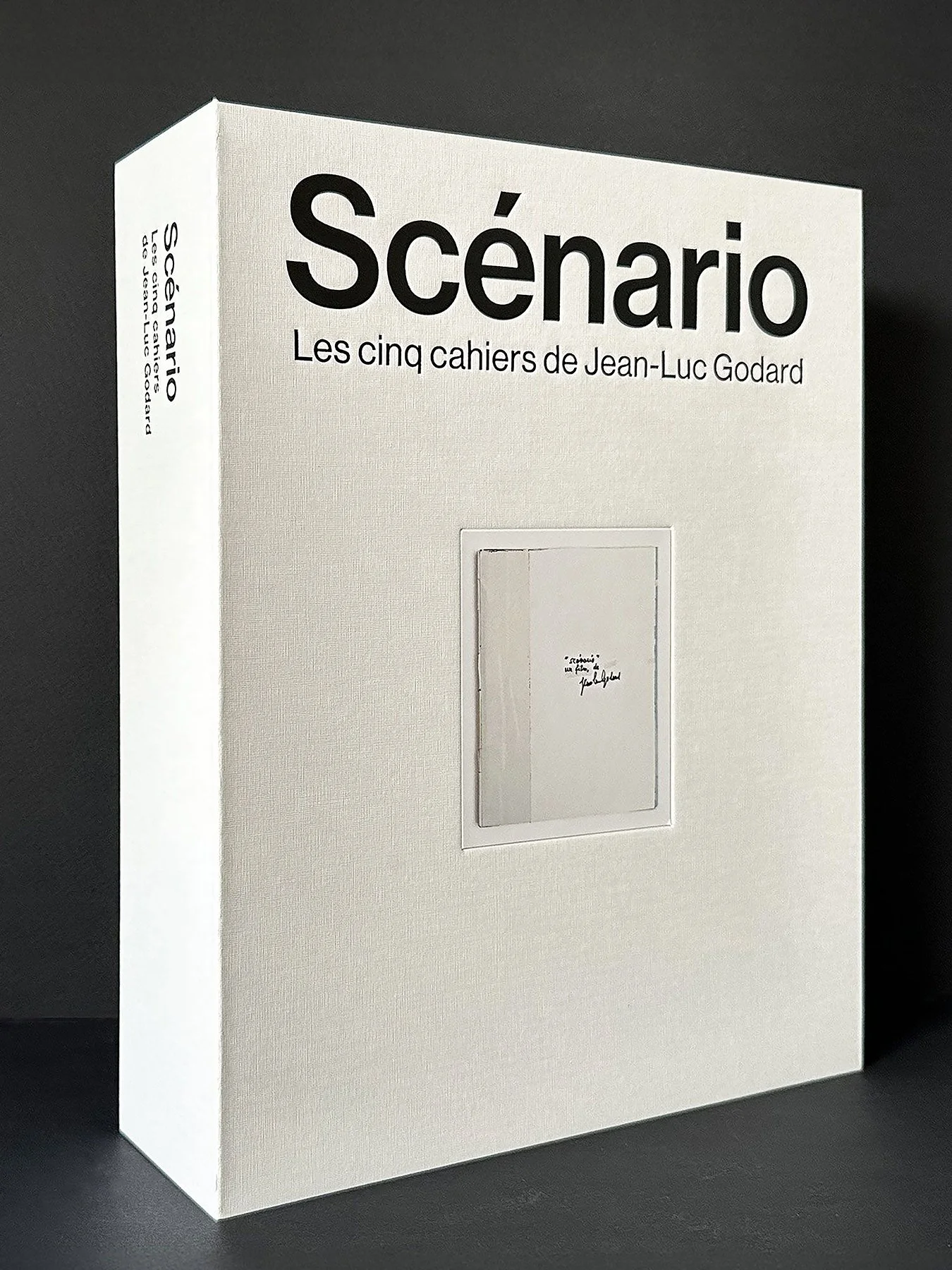
Film Desk Books is proud to be the exclusive U.S. online seller of this deluxe boxset that brings together, reproduced identically, Godard’s five Scénario notebooks by Jean-Luc Godard.
For his final film, Godard assembled five notebooks: five sketches for a film composed of images, painting, drawing, photography, and texts cited or invented. These notebooks are “paper films;” mobilizing different manual and conceptual techniques they are simultaneously research tools and the development of an original form of language.
The notebooks have been faithfully reproduced using the most exceptional technical means available in contemporary printing, allowing them to approach, as closely as possible, the plastic qualities of the originals: including strikethroughs, stains, textures, and overprinting. The boxset is completed with a booklet with English translations of the five notebooks by Michael Witt, accompanied by introductory texts by Dominique Païni, Nicole Brenez and Jean‑Paul Battaggia.
Editorial Design: Mitra Farahani, in collaboration with Aurélien Petit
With the support of Robert Rubin and Stéphane Samuel
Written contributions: Dominique Païni, Nicole Brenez, Jean‑Paul Battagia
English Translations: Michael Witt, Nicholas Elliott, Helen Bandis, Sara Battagia
Graphic design: Élie Colistro
Printed and bound in July 2025 by Grafiche Milani, Segrate (Milan).
Click here to read about the Scénario notebooks at Senses of Cinema
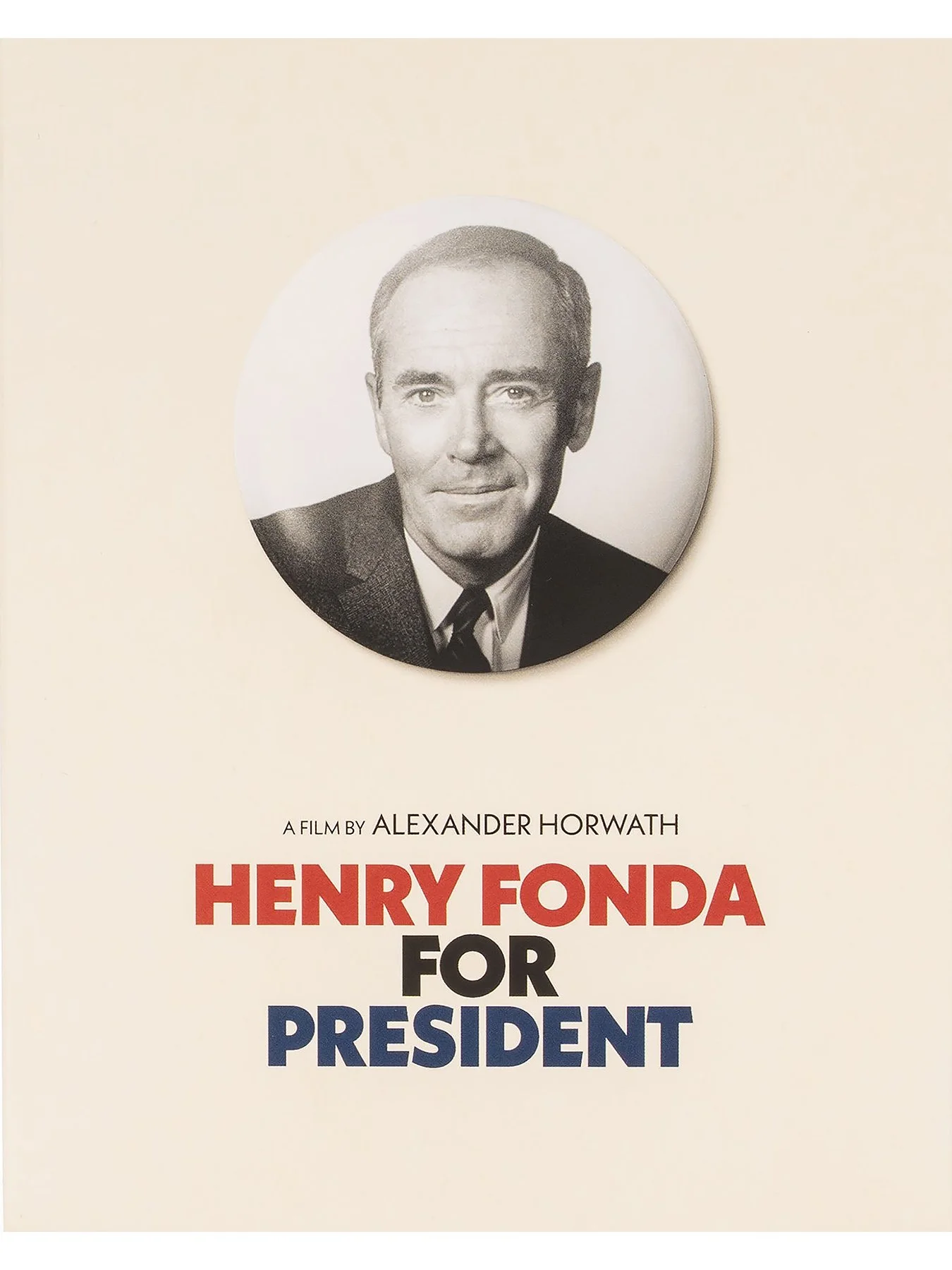
Slipcover edition of Alexander Horwath’s Henry Fonda for President (2024) from The Film Desk’s blu-ray label.
Region A blu-ray, 184 min
Slipcover edition limited to 500 copies
Extras:
Christian Petzold in conversation with Director Alexander Horwath
Kent Jones in conversation with Director Alexander Horwath
32-page booklet featuring on-location photos and writing from J. Hoberman, Farran Smith Nehme, and Alexander Horwath
Theatrical trailer
English SDH subtitles
“The story of Henry Fonda, both on screen and off, is the story of the United States. It’s a story of democratic yearnings and violent shortcomings, traceable not only in the actor’s legendary portrayals of pioneering settler (Drums Along the Mohawk), migrant sharecropper (The Grapes of Wrath), gullible heir (The Lady Eve), and president (Young Mr. Lincoln, Fail-Safe), but also in his own life as the descendant of a Dutch family in pre-colonial New York, and as a witness to watershed events of the 20th century: the Omaha Race Riots of 1919, the war in the Pacific, the civil rights struggle, and the ascendance of another actor, Ronald Reagan, at the climax of the Cold War. ‘His face is a picture of opposites in conflict,”;John Steinbeck once remarked, and indeed Fonda, perhaps more than any other actor of his generation, brought a sense of moral anguish to nearly every role he played, whether victims of injustice (You Only Live Once, The Wrong Man), or messengers of salvation (My Darling Clementine, 12 Angry Men) and terror (The Ox-Bow Incident, Once Upon a Time in the West). Tracing the entwined, complex trajectories of an actor and his nation in Hollywood movie clips, recorded interviews, and a cross-country pilgrimage to significant landmarks, Alexander Horwath—together with Michael Palm and Regina Schlagnitweit—has created a magisterial work of cultural history.”
—Josh Siegel, Curator of Film, Museum of Modern Art
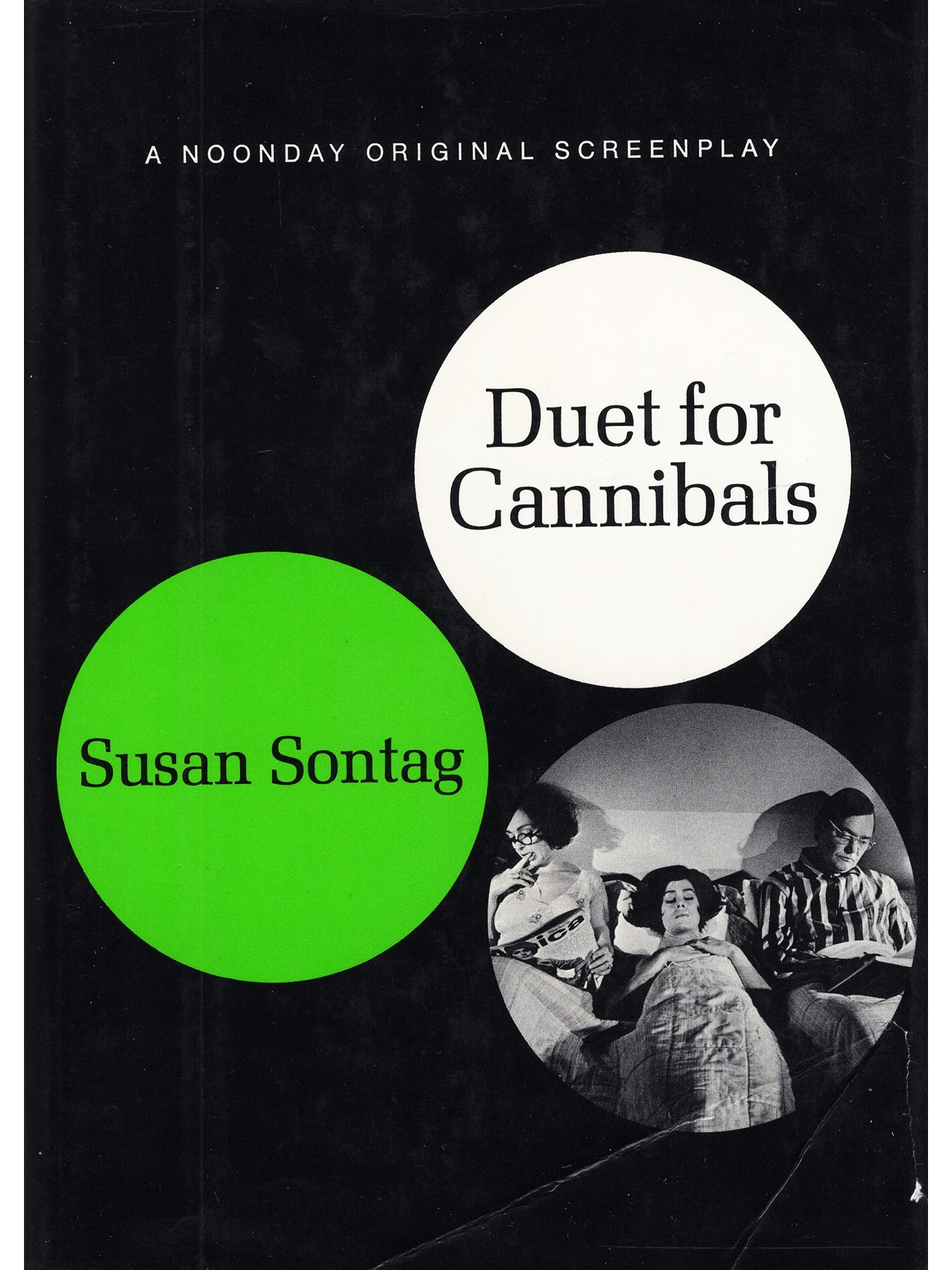
Published by Farrar, Straus & Giroux, 1970
Sewn-bound hardcover
First printing
129 pages
8.25×5.75 inches
First edition SIGNED BY SUSAN SONTAG. Near Fine book in a Very Good unclipped Dust Jacket. Comes in removable protective Brodart mylar cover
The screenplay for Susan Sontag’s 1969 film Duet for Cannibals. Features an introduction from Sontag and images throughout.
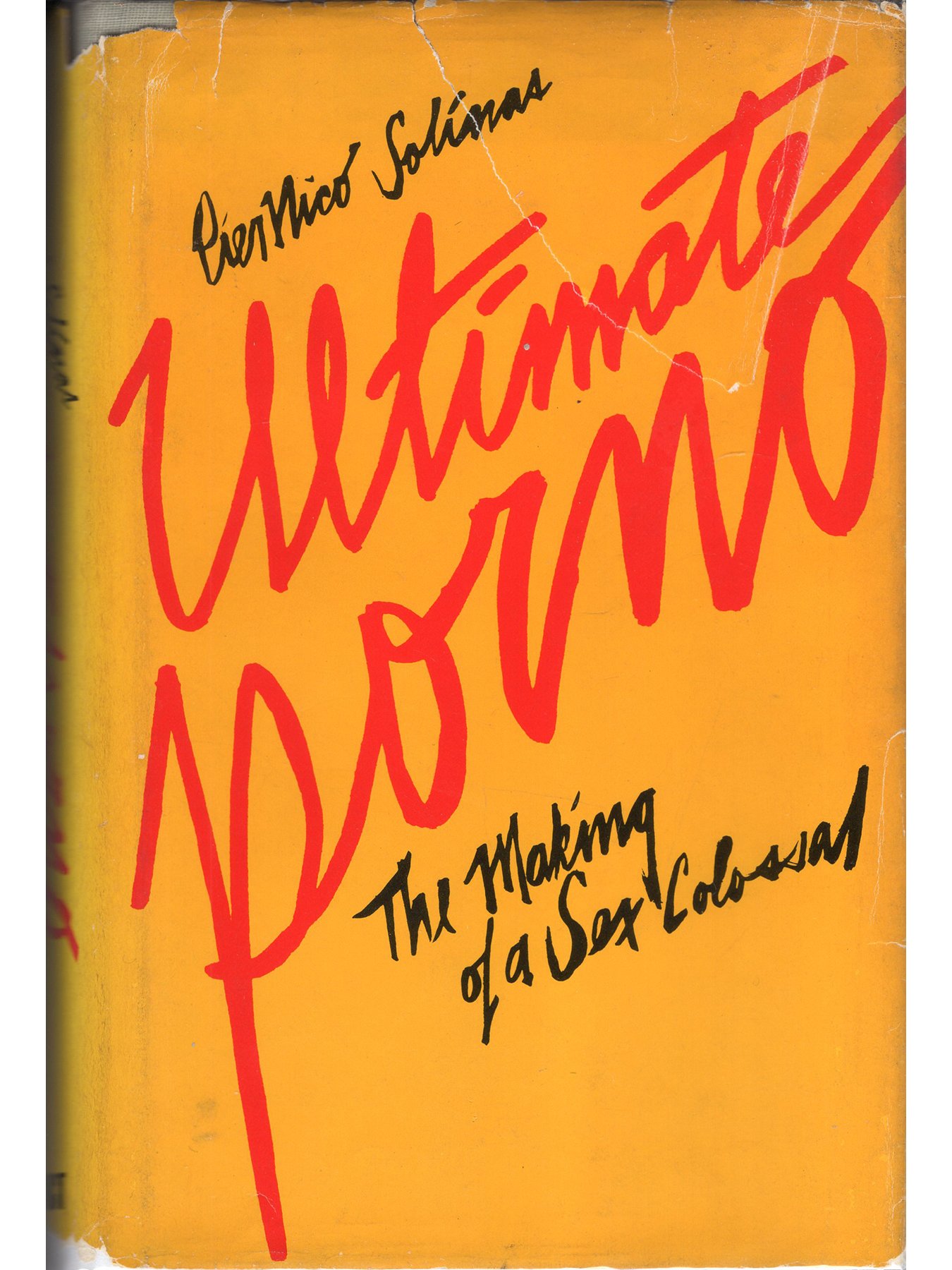
Published by EYECONTACT, 1970
Sewn-bound hardcover
First printing
337 pages
8.5x6 inches
First edition. Book in Very Good condition. Dust jacket in Good+ condition with tears and chips, plus light fading to the spine. Comes in removable protective Brodart mylar cover
Stamped “From the Library of Paul Morrissey” on first page
Very rare book on the making of Tinto Brass’s notorious Caligula (1979) written by the film’s First Assistant Director .

Published by Eye Filmuseum, 2003
Sewn-bound softcover
158 pages
9.5x7 inches
Book is in Near Fine condition.
This publication highlights the Chantal Akerman’s installations, with full-color photographs and several essays exploring the central themes of Akerman’s oeuvre such as gender roles, migration and the passage of time.
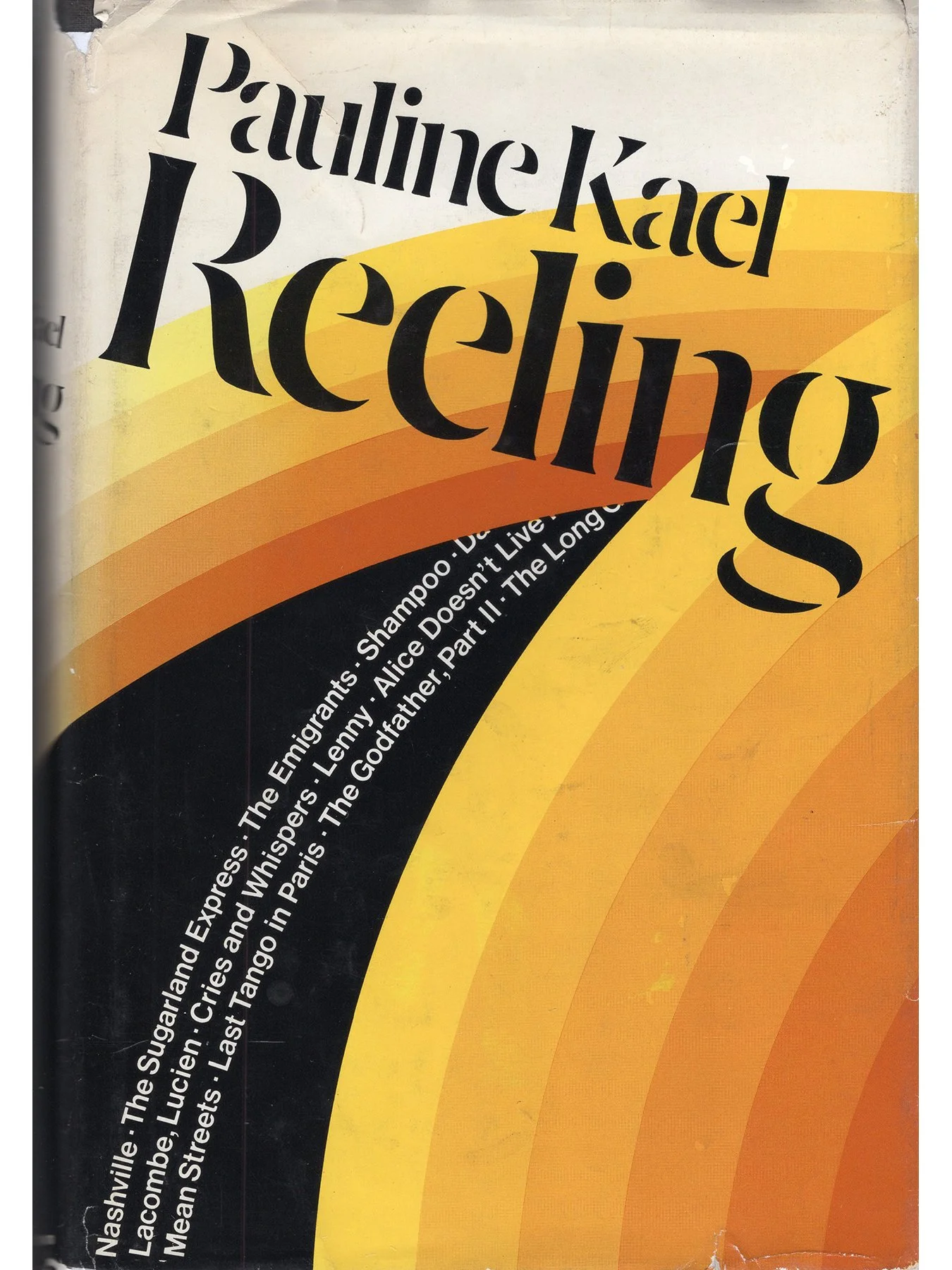
Published by Little, Brown and Company, 1976
Sewn-bound hardcover
First printing
497 pages
9.5x6 inches
First edition. Book in Very Good condition. Dust jacket in Good+ condition with small chips and tears to top edge and sun fading on spine. Comes in removable protective Brodart mylar cover
Reeling is largely composed of movie reviews, ranging from Kael’s famous review of Last Tango in Paris to her review of A Woman Under the Influence, but it also contains her famous longer essay “On the Future of Movies” as well as a book review of The Fred Astaire & Ginger Rogers Book, by fellow The New Yorker critic Arlene Croce.
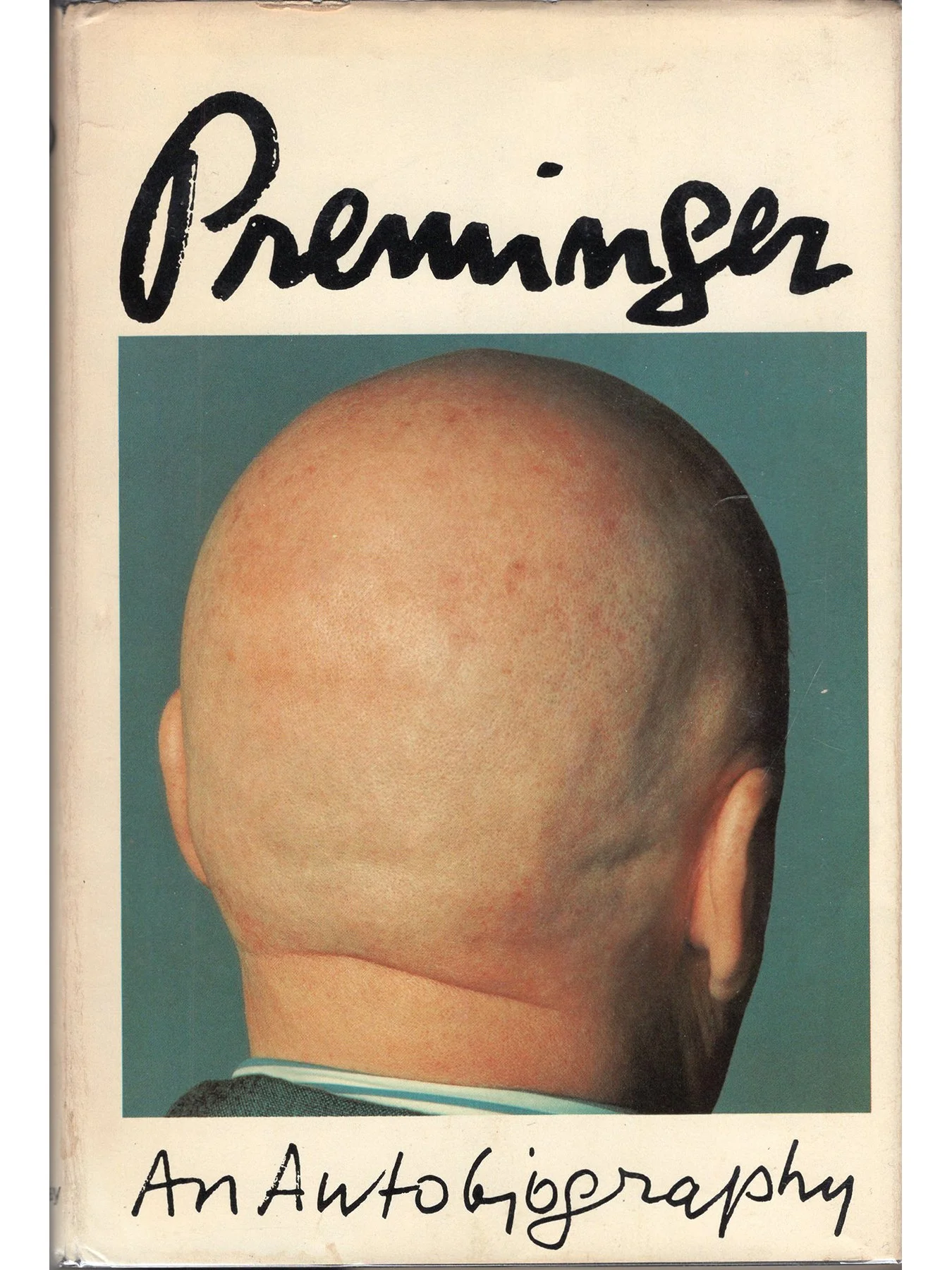
Published by Doubleday & Company, 1977
Sewn-bound hardcover
First printing
208 pages
8x5.5 inches
First edition. Near Fine book in Near Fine price-clipped dust jacket. Comes in removable protective Brodart mylar cover
First edition of Otto Preminger’s autobiography in Saul Bass designed dust jacket. Contains images throughout.
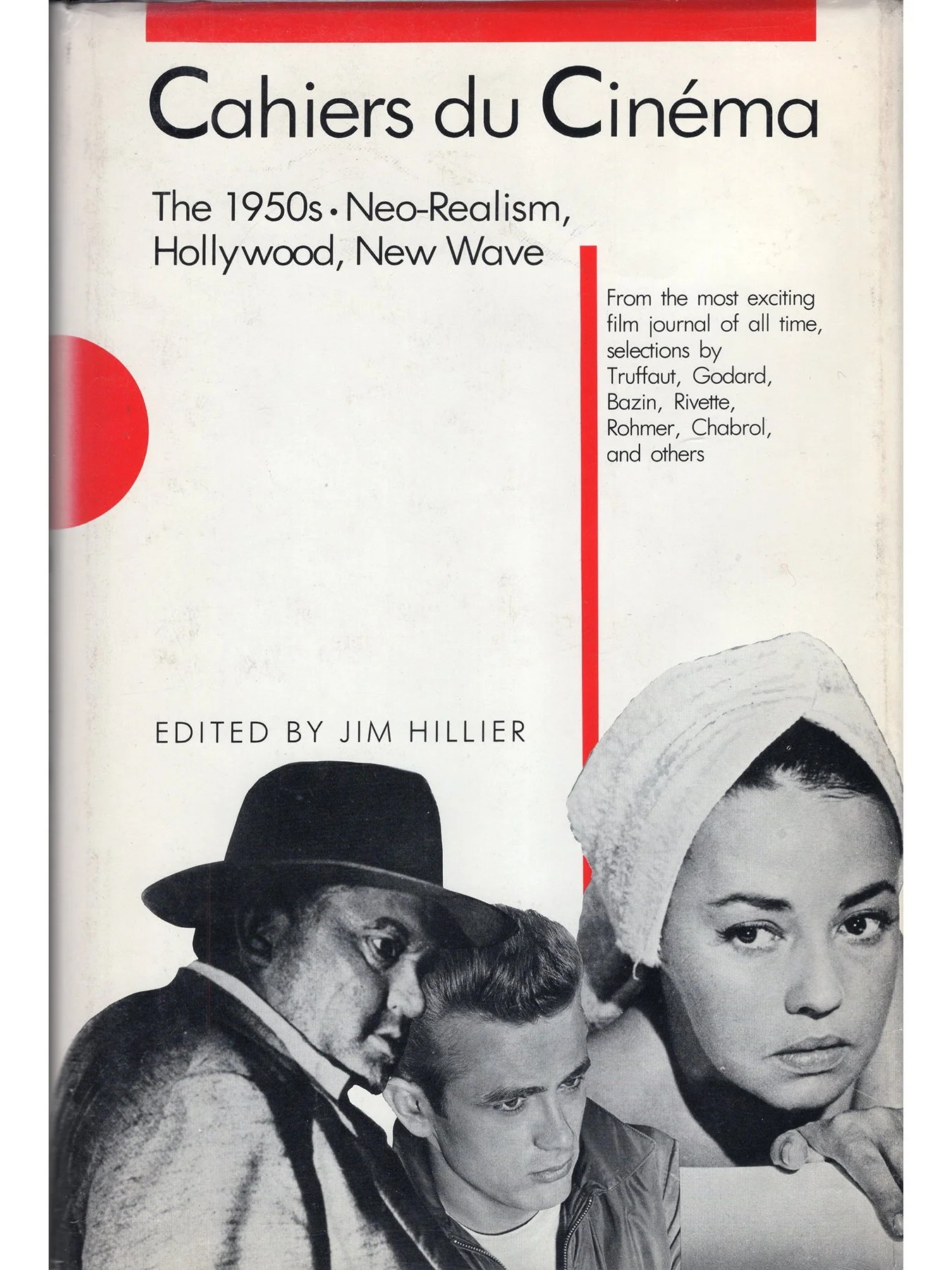
Published by Harvard University Press, 1985
Sewn-bound hardcover
First printing
312 pages
9x6 inches
Near Fine book. Dust jacket is Near Fine aside from some light fading on the spine. Comes in removable protective Brodart mylar cover
Features essays by Jean-Luc Godard, Francois Truffaut, Eric Rohmer, Jacques Rivette, Claude Chabrol, Andre Bazin, Fereydoun Hoveyda, Luc Moullet and Alexandre Astruc, amongst others. Edited and with an introduction by Jim Hillier.
The selections in this volume are drawn from the first decade of Cahiers, 1951–1959, when a group of young iconoclasts rocked the world of film criticism with their provocative views on international cinema―American, Italian, and French in particular. They challenged long-established attitudes by championing American popular movies, addressing genres such as the Western and the thriller and the aesthetics of technological developments like CinemaScope, emphasizing mise en scène as much as thematic content, and assessing the work of individual filmmakers such as Hawks, Hitchcock, and Nicholas Ray in terms of a new theory of the director as author—auteur—a revolutionary concept at the time. Italian film, especially the work of Rossellini, prompted sharp debates about realism that helped shift the focus of critical discussion from content toward style. The critiques of French cinema have special interest because many of the journal’s major contributors and theorists―Godard, Truffaut, Rohmer, Rivette, Chabrol―were to become some of France’s most important film directors and leaders of the New Wave.
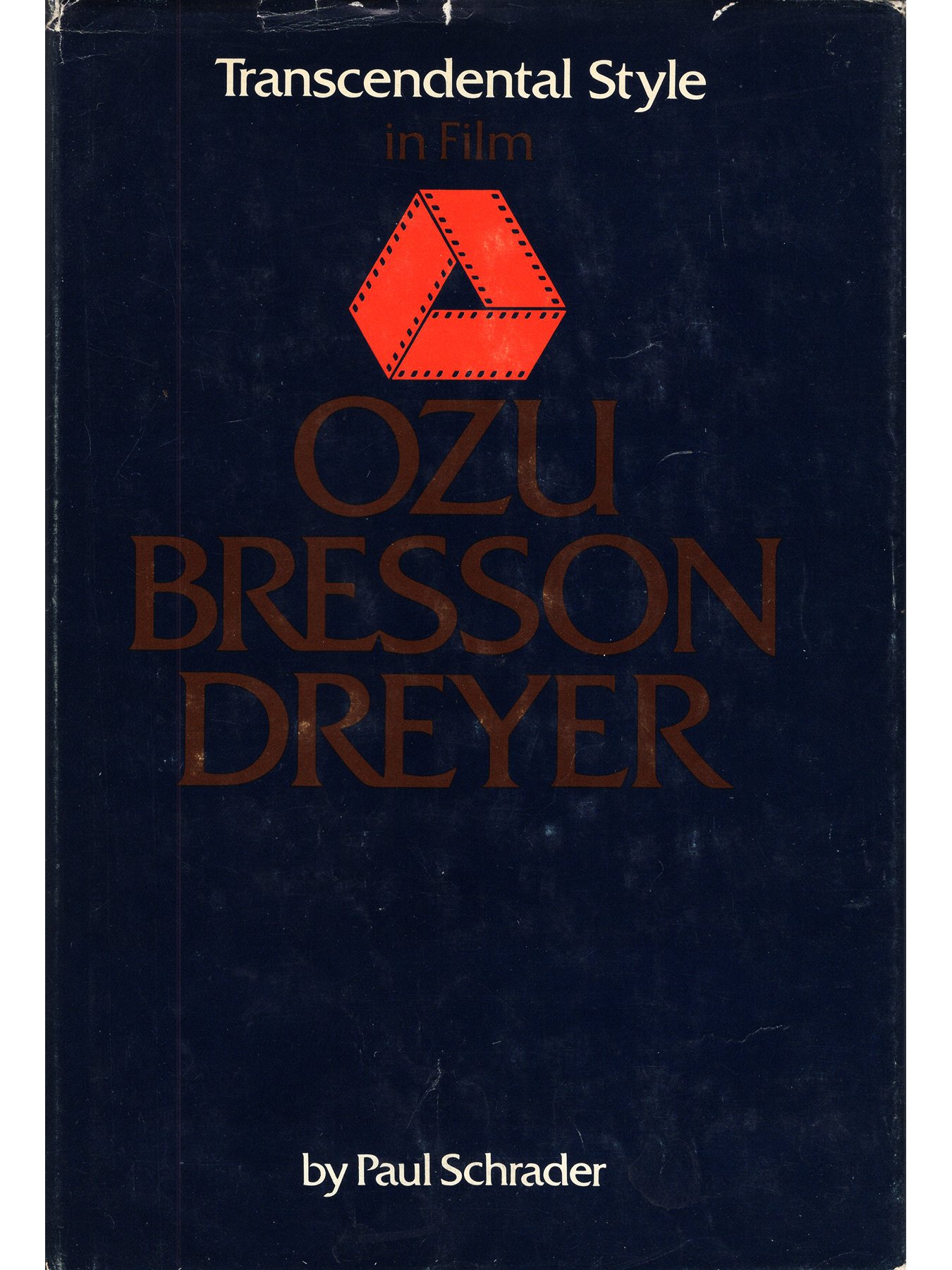
Published by University of California Press, 1972
Sewn-bound hardcover
First printing
194 pages
9.25×6.25 inches
First edition. Near Fine book in Very Good price-clipped dust jacket with some small tears to top edge. Comes in removable protective Brodart mylar cover
Rare first edition of Paul Schrader’s classic study of the films of Ozu, Bresson and Dreyer. Black and white images throughout.

Published by the Museum of Modern Art, 1992
Sewn-bound hardcover
First printing
240 pages
12.5x9.5 inches
Near Fine condition
Edited by Raymond Bellour and Mary Lea Brandy.
Beautiful publication from MoMA, copiously illustrated in color and black and white, with essays by Gilles Deleuze, Alain Bergala, Laura Mulvey, Serge Daney, Peter Wollen and Jonathan Rosenbaum amongst others.
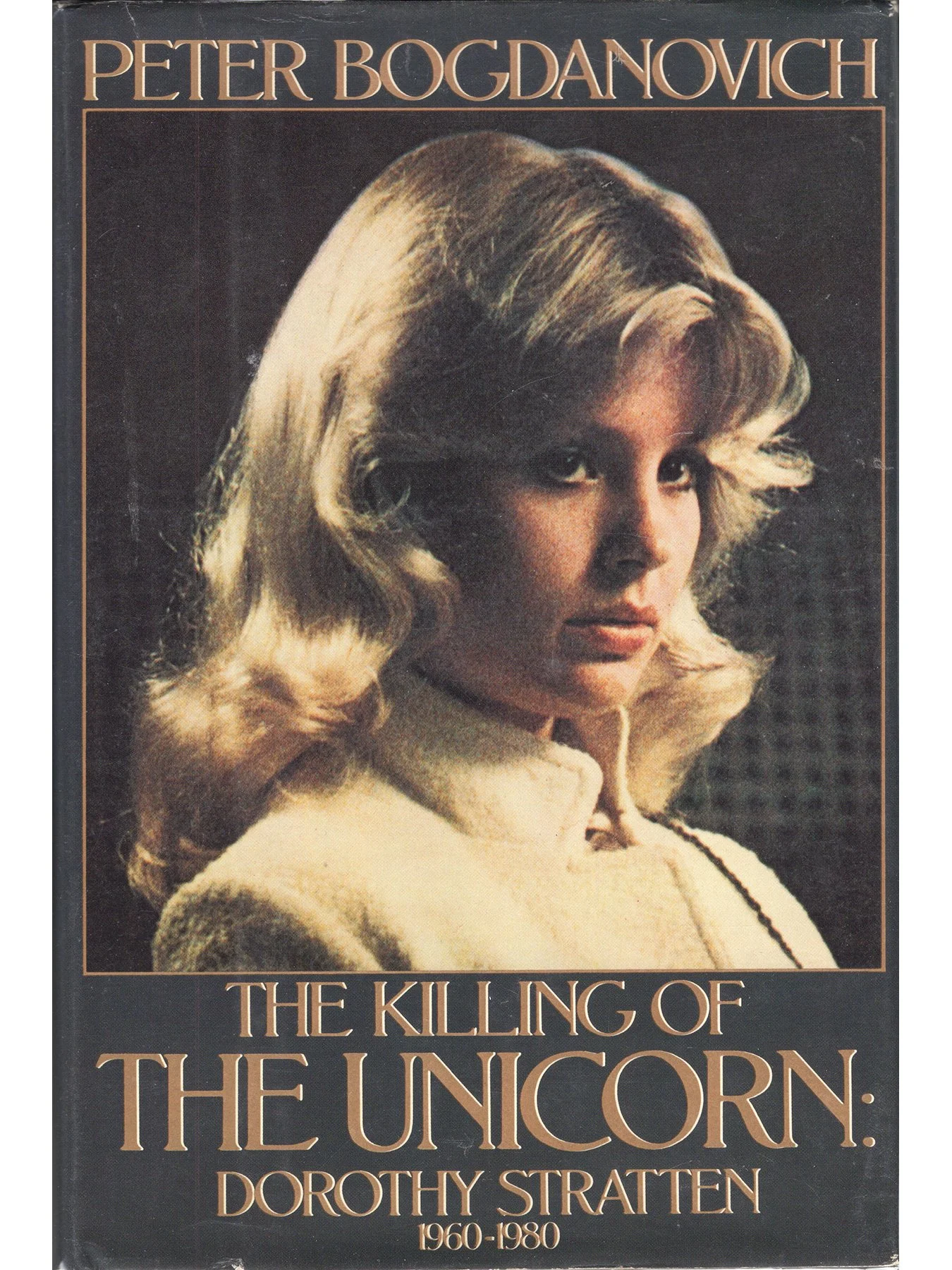
Published by William Morrow and Company, 1984
Hardcover
First printing
186 pages
9x6 inches
Near Fine condition. Comes in removable protective Brodart mylar cover.
Very rare OOP first edition of Bogdanovic’s book on the life of Dorothy Stratten.

Published by Lumen Books, 1988
Sewn-bound softcover
117 pages
9x6 inches
Book is in Near Fine condition.
“Borges's view of film as a story-telling mechanism is a necessary corrective to the dominant, narrow realism of Bazin and Agee in Western criticism.”—Andrew Sarris
The definitive edition of this celebrated collection of Borges 1930s and 40s film reviews, complemented by an introduction by Cozarinsky's, along with his critical studies of eight film adaptations of Borges's work. Prologue by Adolfo Bioy-Cesares. Edited by Edgardo Cozarinsky

Published by Simon and Schuster, 1973
Hardcover
First Edition
288 pages
9.5x6 inches
Very Good condition. Comes in removable protective Brodart mylar cover.
Ingmar Bergman, an undisputed giant of modern cinematic art, here talks frankly and extensively about himself and his films. This discussion ranges from Bergman’s childhood memories to his admiration for Strindberg to his relationship with the stars whom he made famous: Liv Ullmann, Harriet Andersson, Max von Sydow and Bibi Andersson, among others.

Published by Faber & Faber, 1989
Hardcover
First printing
178 pages
9.5x6.5 inches
Near Fine condition. Comes in removable protective Brodart mylar cover
Edited by David Thompson and Ian Christie. Introduction by Michael Powell.
Rare first edition of the classic interview book with Martin Scorsese.
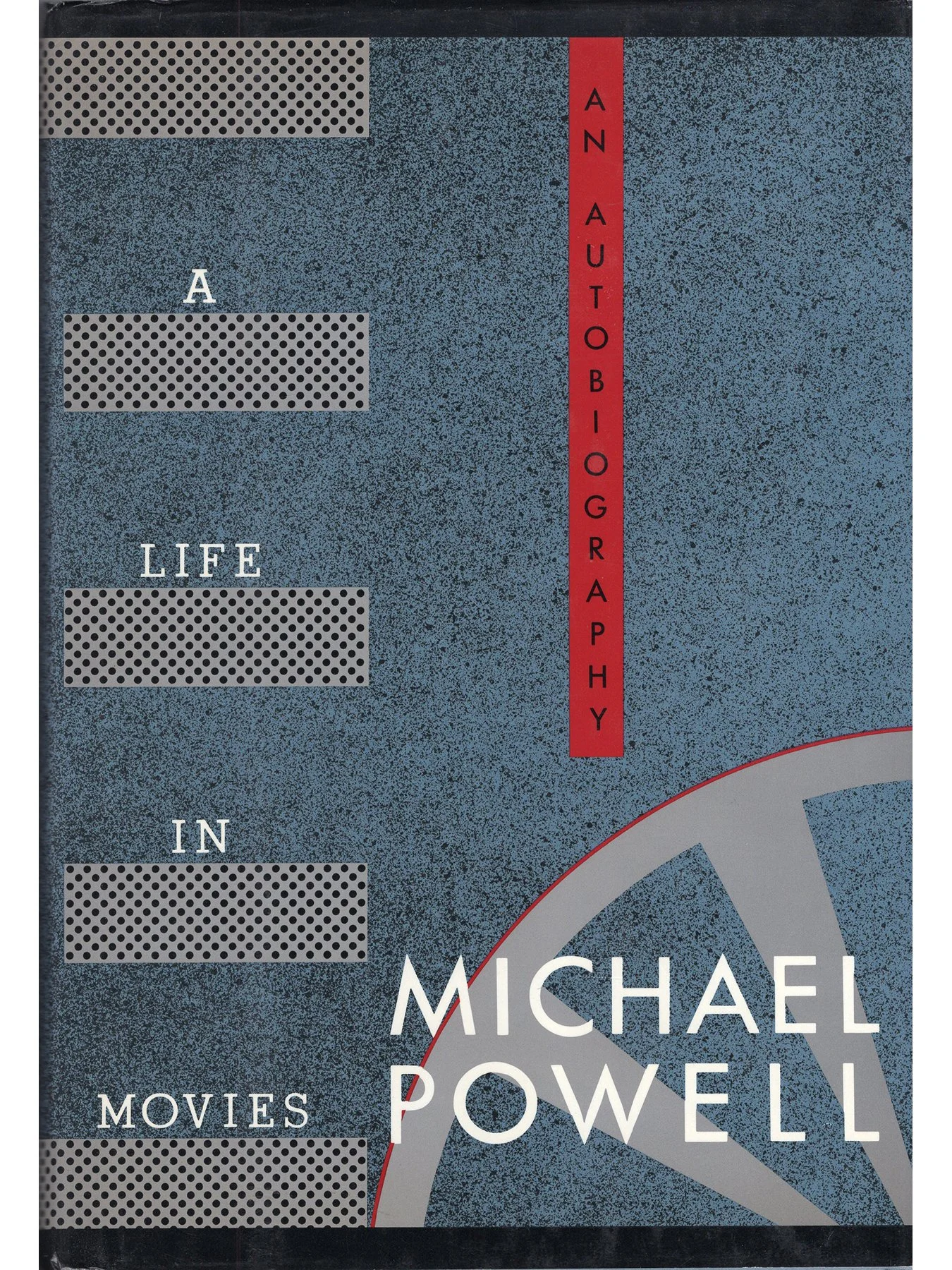
Published by Alfred A. Knopf, 1987
Sewn bound hardcover
First printing
705 pages
9.5×6.5 inches
Book is in Very Good condition. Comes in removable protective Brodart mylar cover
Michael Powell lived intimately, and abundantly, with the movies—entering the business at the end of the silent era, growing up in the industry, becoming one of Britain's most respected and influential directors. This first volume of his autobiography captures the startling momentum of his mercurial early career: from apprenticeship with Hitchcock, to the fateful meeting with the man who became his principal collaborator Emeric Pressburger; to the glories of A Matter of Life and Death, Black Narcissus and The Red Shoes. Powell's writing has the same brilliant feel for time, place and story as his amazing films.
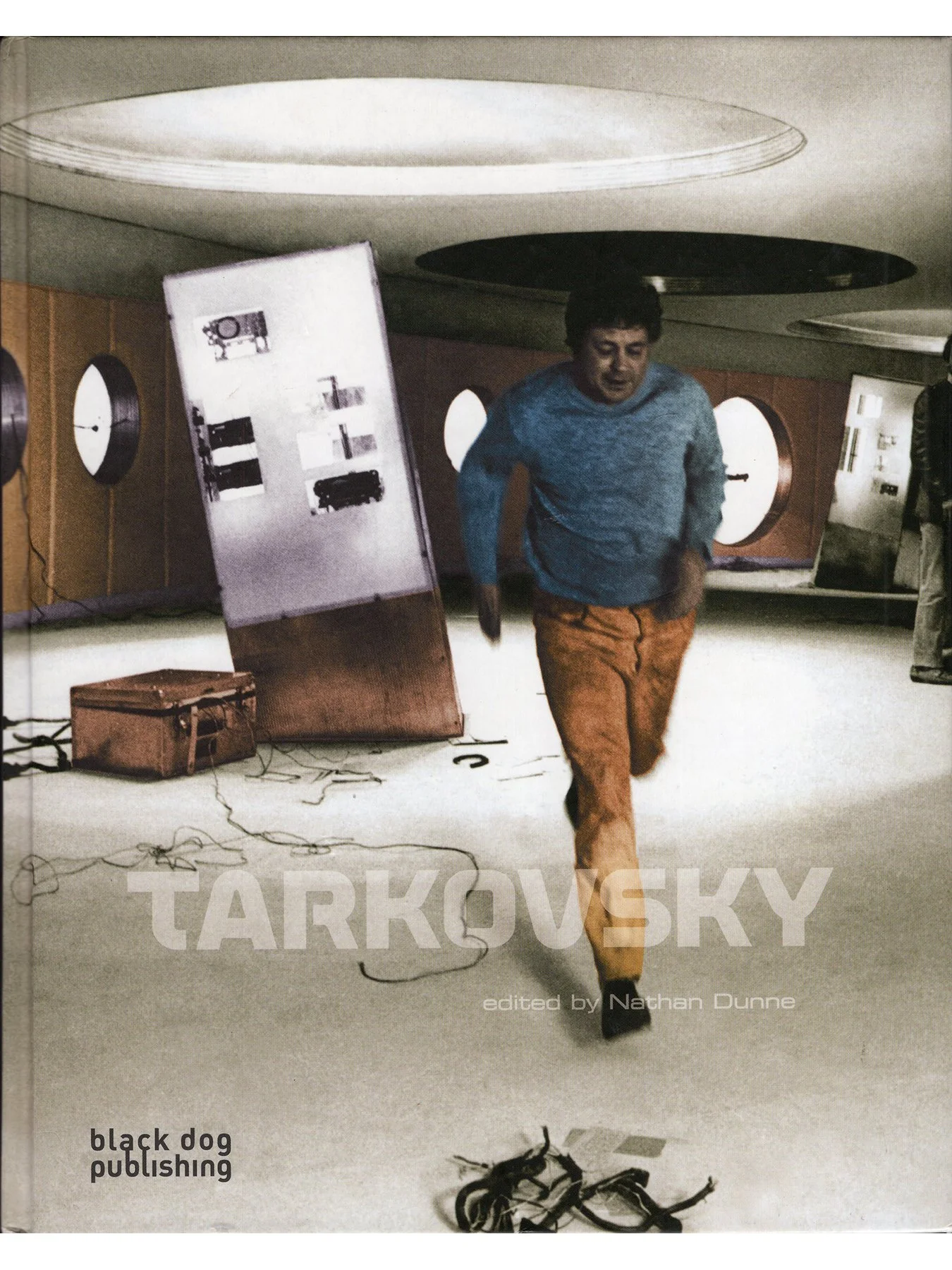
Published by Black Dog Publishing, 2008
Sewn-bound hardcover
First printing
463 pages
10x8 inches
Near Fine condition
“Beautifully illustrated anthology...these essays offer acute and profound insights into Tarkovsky's world.”—Sight & Sound (Book of the Month)
Lavishly illustrated book of essays on Tarkovsky. Edited by Nathan Dunne.
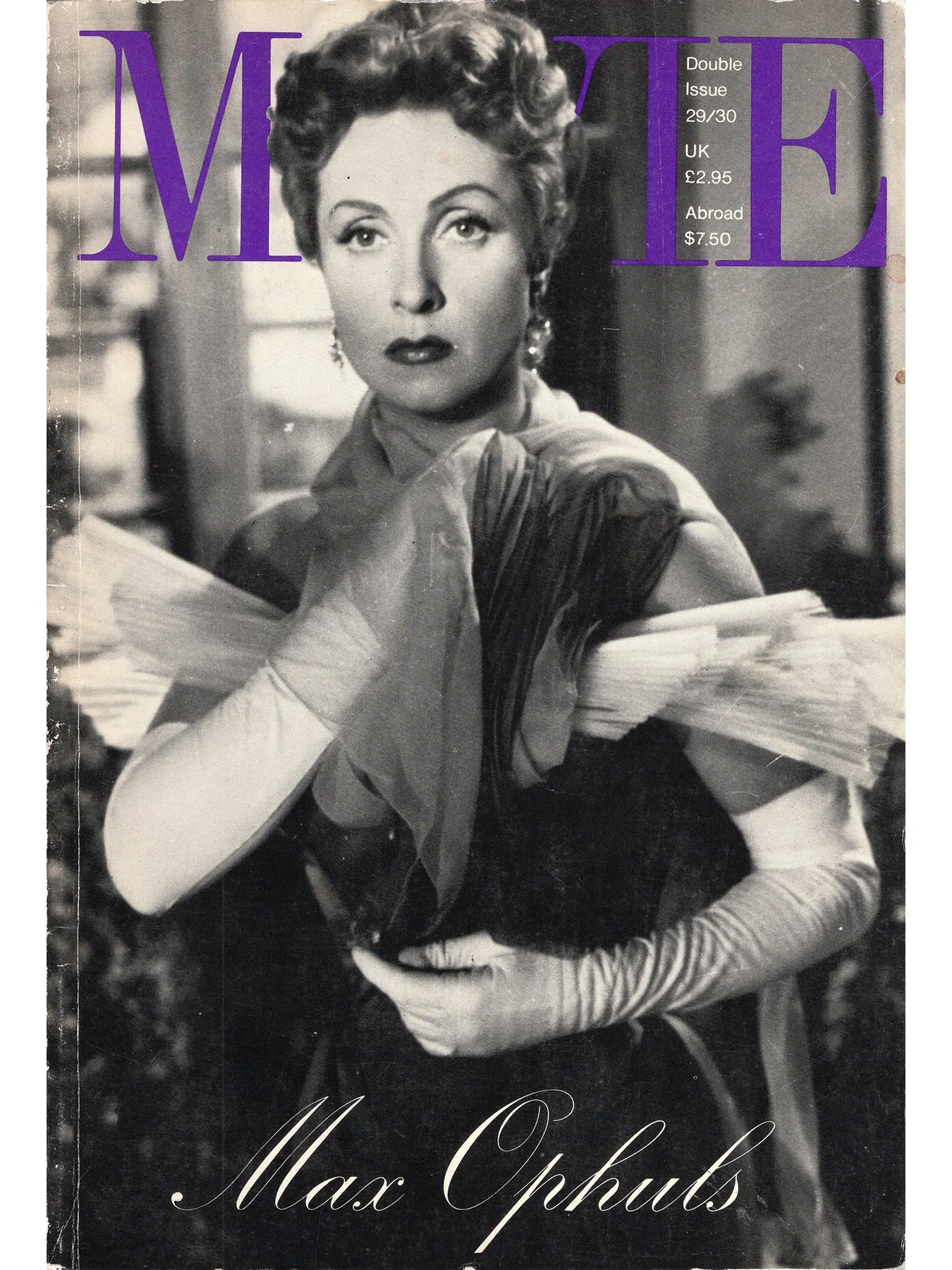
Published by Movie magazine, 1982
Softcover
128 pages
9.75×6.75 inches
Softcover book is in Very Good condition. Crease to spine but binding is tight
Double issue of Movie devoted to Max Ophuls.
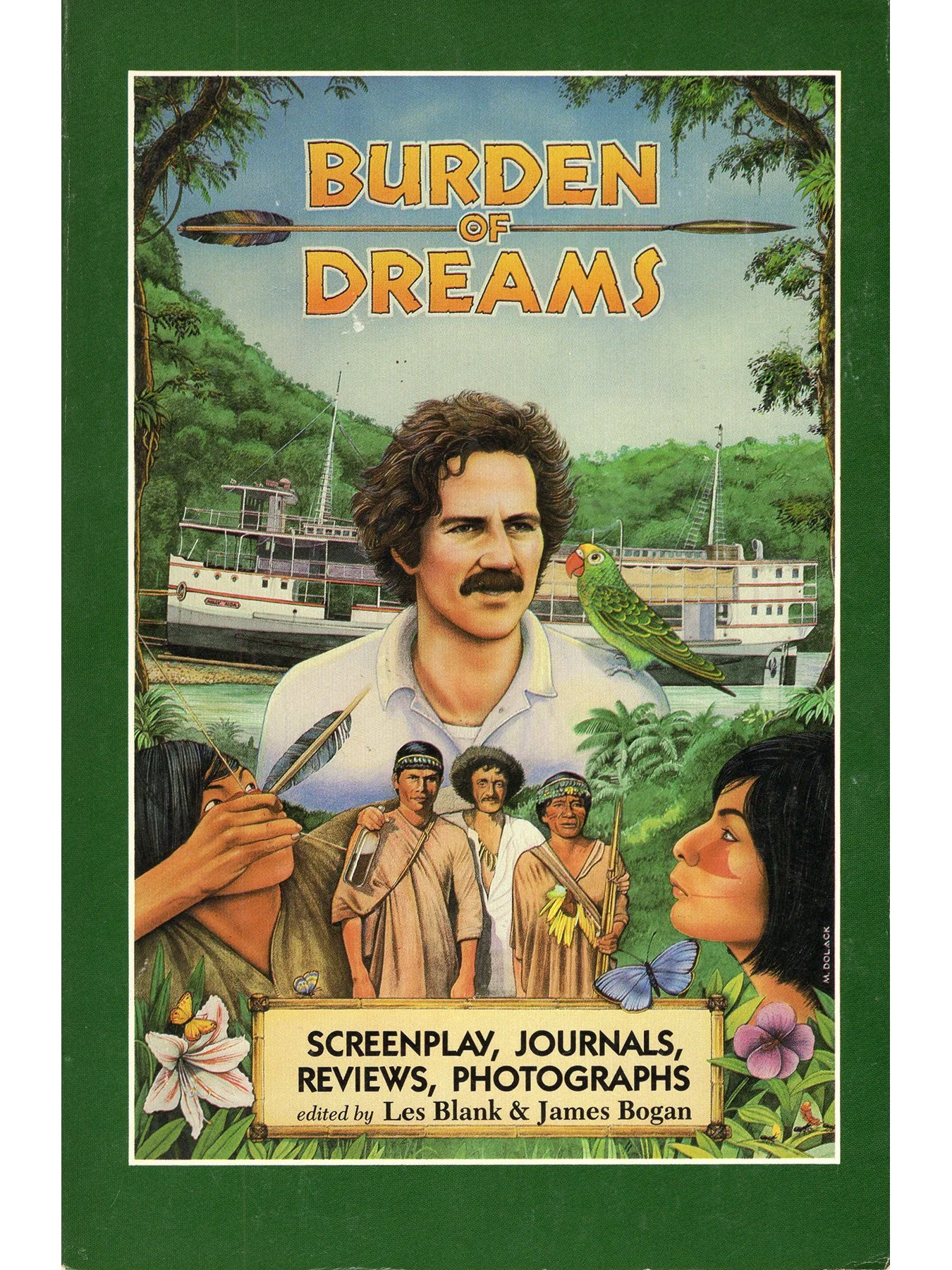
Published by North Atlantic Books, 1984
Softcover
First printing
288 pages
9×6 inches
Near Fine unread condition
Contains the screenplay to Burden of Dreams, a fascinating on-set report by legendary journalist Michael Goodwin, the journals of Les Blank, Maureen Gosling and Werner Herzog chronicling the filmmaking perils and adventures in the Peruvian Amazon, and a series of essays and reviews of the film.
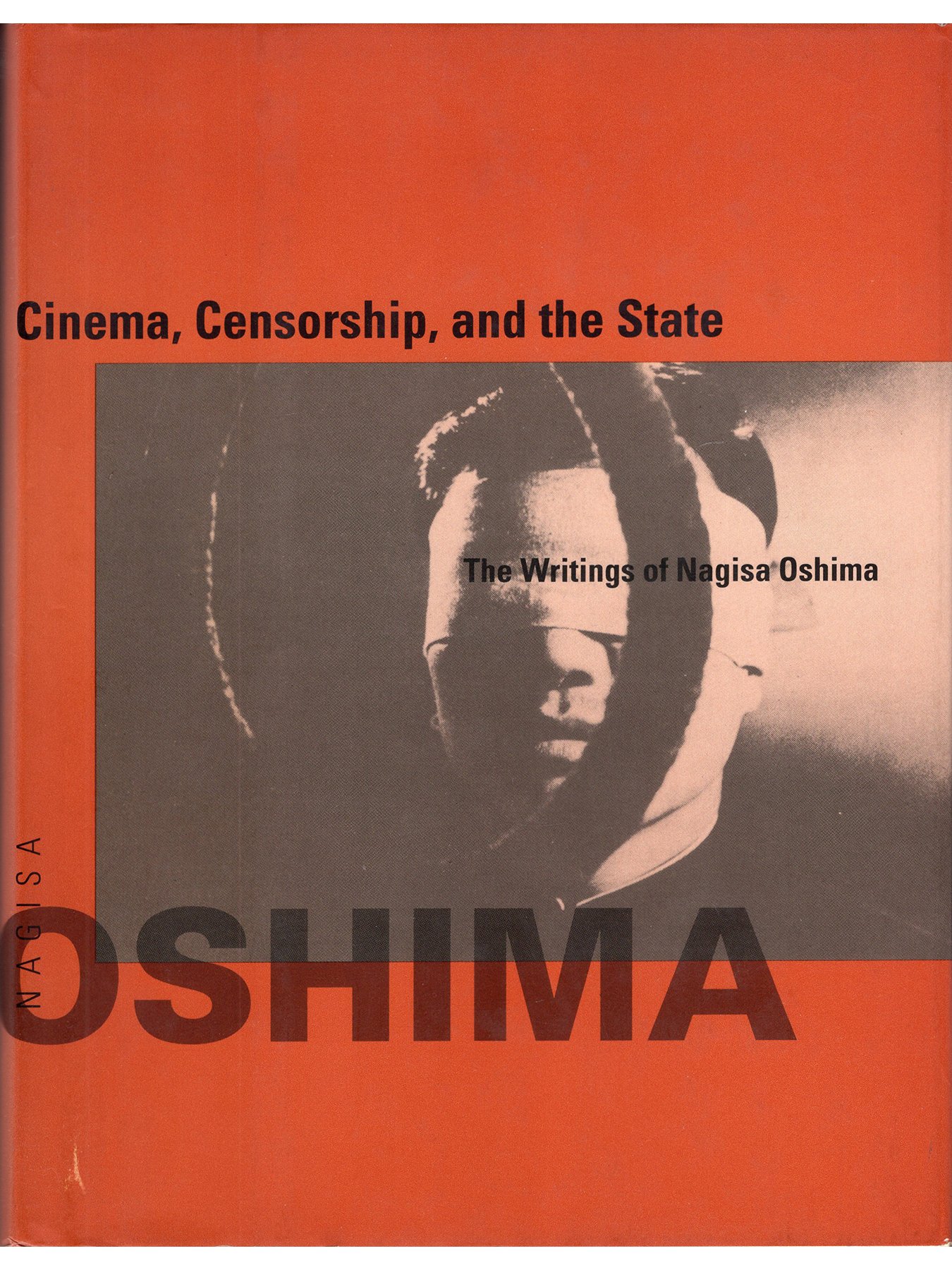
Published by MIT Press, 1992
Sewn bound hardcover
First printing
308 pages
9x7 inches
Near Fine condition. Comes in removable protective Brodart mylar cover.
Nagisa Oshima is generally regarded as the most important Japanese film director after Kurosawa and is one of Japan’s most productive and celebrated postwar artists. The more than 40 writings that make up this intellectual autobiography reveal a rare conjunction of personal candor and political commitment. Entertaining, concise, disarmingingly insightful, they trace in vivid and carefully articulated detail the development of 0shima's theory and practice.The writings are arranged in chronological order and cover the period from the mid-1950s to the late 1970s. Following a historical overview of contemporary Japanese cinema, a substantial section articulates the theoretical and political rationale of 0shima's own film production, which he sees as being profoundly influenced by the social formation and political processes of postwar Japan. Among many other topics considered in his essays, Oshima questions the economics of film production, the ethics of the documentary film, censorship (both political and sexual), and the relation of aesthetics and social taboos. A filmography and notes round out this important collection.
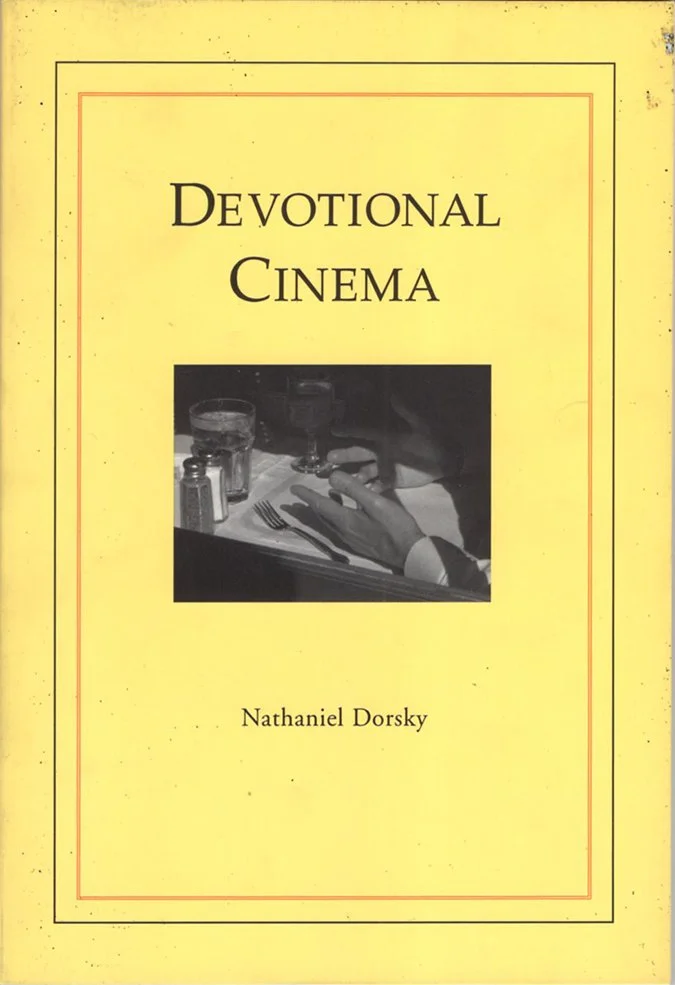
Published by Tuumba Press, 2003
Softcover
52 pages
8×5.5 inches
Very Good cover due to some shelf-wear. Interior is in Near Fine condition and appears unread
Rare copy of Nathaniel’s Dorsky’s Devotional Cinema. Offers an exploration into the language of film, reprised from a lecture on religion and cinema delivered at Princeton University. The new edition includes additions and changes related to the author's understanding of Carl Theodor Dreyer’s The Passion of Joan of Arc as well as other smaller clarifications. Dorsky has been making and exhibiting films within the avant-garde tradition since 1964.
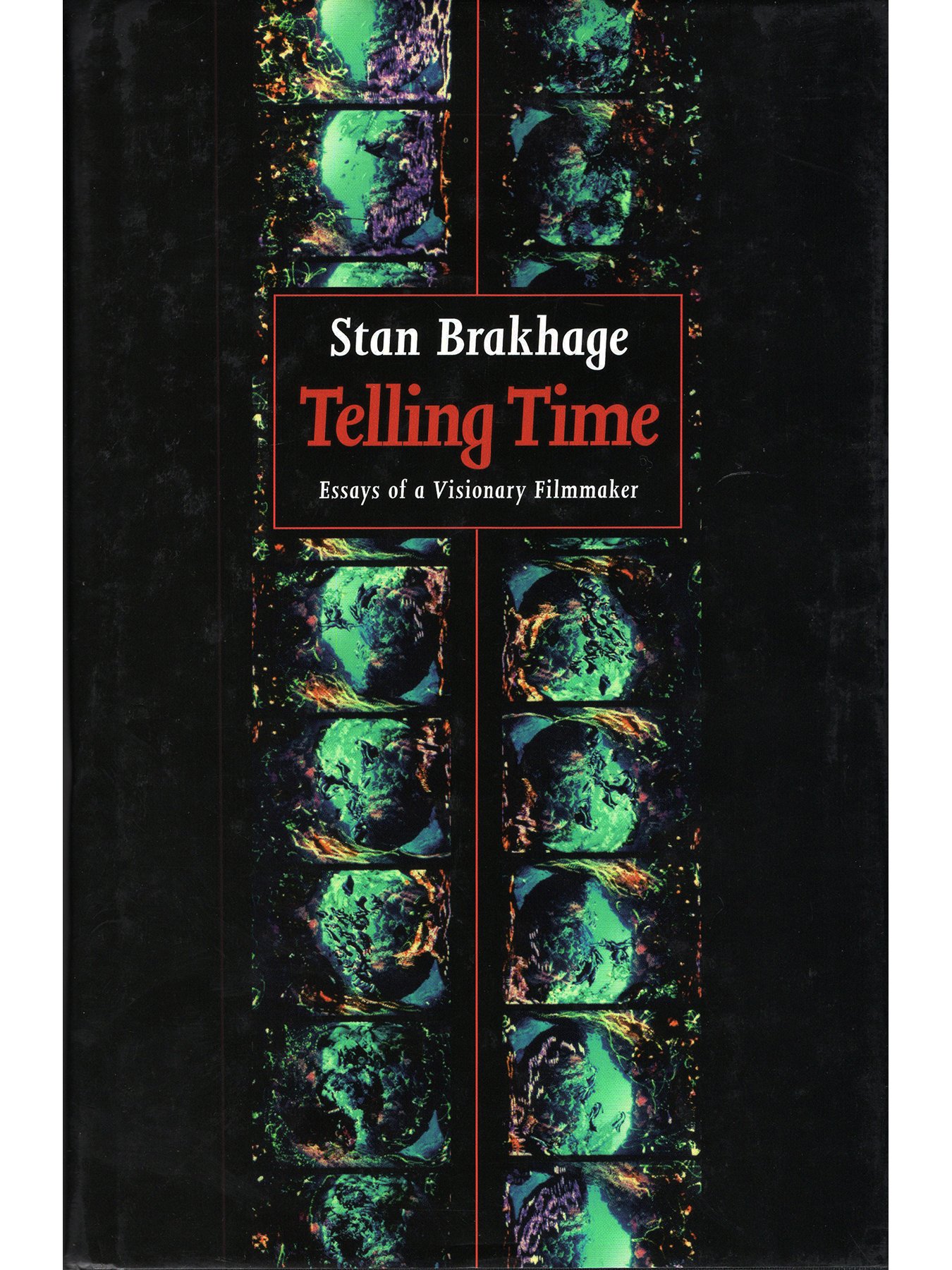
Published by Documentext, 2003
Sewn bound hardcover
First printing
144 pages
8.5×5.5 inches
First edition. Near Fine condition. Comes in removable protective Brodart mylar cover
Throughout a career spanning half a century, Stan Brakhage, the foremost experimental filmmaker in America, and perhaps the world, wrote controversial essays on the art of film and its intersections with poetry, music, dance, and painting. Published in small circulation literary and arts journals, they were gathered later into such books as Metaphors on Vision and Film at Wit’s End. Beginning in 1989, and for a decade thereafter, Brakhage wrote the essays in Telling Time as an occasional column for Musicworks, a Toronto quarterly. Ostensibly about the relation of film to music, they soon enlarged to explore primary concerns beyond film, including Brakhage's aesthetic theories based on the phenomenology of human cognition. In these essays he is as brilliant discussing Gertrude Stein or romantic love as he is on child psychology, astronomy, and physiology, all the while teasing out vital correspondences between the arts, and upending conventional ideas of how we perceive. His investigations of other artists are models of sympathetic intuition and generosity. Above all, he shares his theories, discoveries and understandings in the spirit of establishing a groundwork for many varieties of human liberation. His prose is filled with flashes of insight, elaborated metaphors, playful elisions, shorthand puns and neologisms, personal digressions, surprising epiphanies, leaps of faith, affronts to authority. He appeals to the imagination, and invites us to a more profound and personal experience of art.
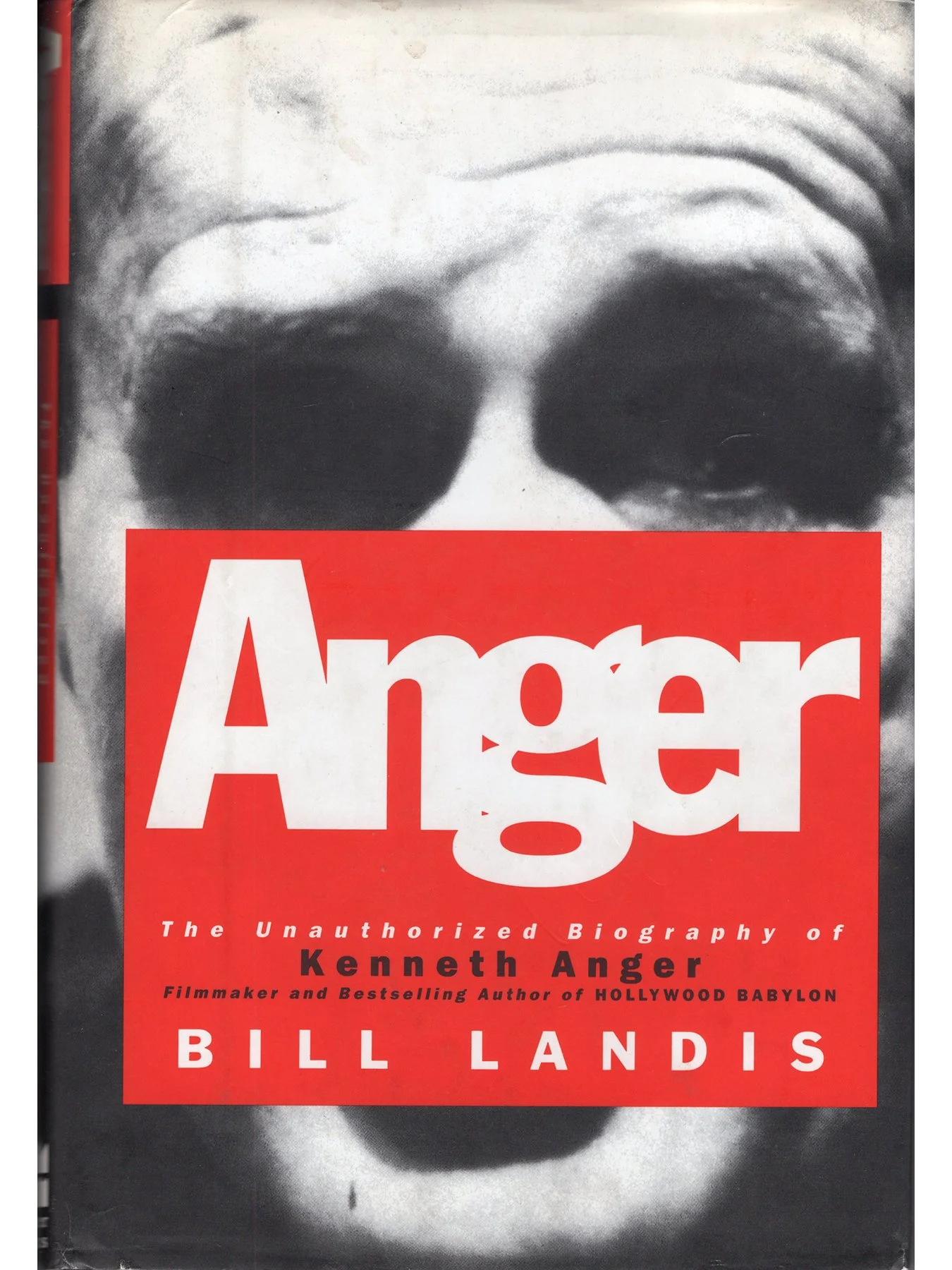
Published by Harper Collins, 1984
Sewn bound hardcover
First printing
290 pages
9x6 inches
Near Fine book in a Very Good dust jacket. Comes in removable protective Brodart mylar cover.
A biography of the cult filmmaker and author of the best-selling Hollywood Babylon books traces his role in the underground film movement, the gay movement, and the drug culture of the forties through the sixties.
Highlights from our shop:
Published by Film Desk Books, 2026
Perfect-bound softcover
First edition of 1,500
369 pages
8×5.5 inches
“There is, or once was, a movie universe—a quasi-autonomous realm of plotlines and personalities, coincidences and crossreferences, quasars and black holes. Not just stargazers but anyone who frequented the world’s movie houses lived there, at least part of the time...”
A brand-new anthology of J. Hoberman's previously uncollected essays, tributes, reviews, and ruminations from his post-Village Voice career. Hoberman published his first piece in the Voice in February 1973 and his last in January 2012. Covering contributions from a range of publications (beginning with "After My De-Voice"), these are the work of a recovering film critic, post-2011 and post-Voice, without the burden and benefit of a weekly gig or a journalistic peg.
Hoberman considers the Spaghetti Western, "Pop Before Pop: Welles, Sirk, and Hitchcock," the films of the Obama era, the film maudit, the U.S. distribution history of Fassbinder, and Triumph of the Will; as well as reviews of films by Chantal Akerman, Mike Kuchar, Jean Rouch, Steve McQueen, Sergei Loznitsa, and Todd Phillips; tributes to Manny Farber, Jean Luc-Godard, and Elliott Gould; and two pieces—”My Debt to Jonas Mekas” and “Why I cannot review Jonas Mekas's Conversations with Filmmakers”—examining his conflicting feelings about a singular figure in cinema history and the editor who published his first pieces for the Voice.
“One of the few film writers whose work has no expiration date.”—Ted Loos, New York Times
“Perhaps the preeminent stream-of-social-consciousness film scholar of the past thirty years.”—Adam Nayman, Cineaste
Click here to read an interview with J. Hoberman about Across the Movi-verse in Screen Slate